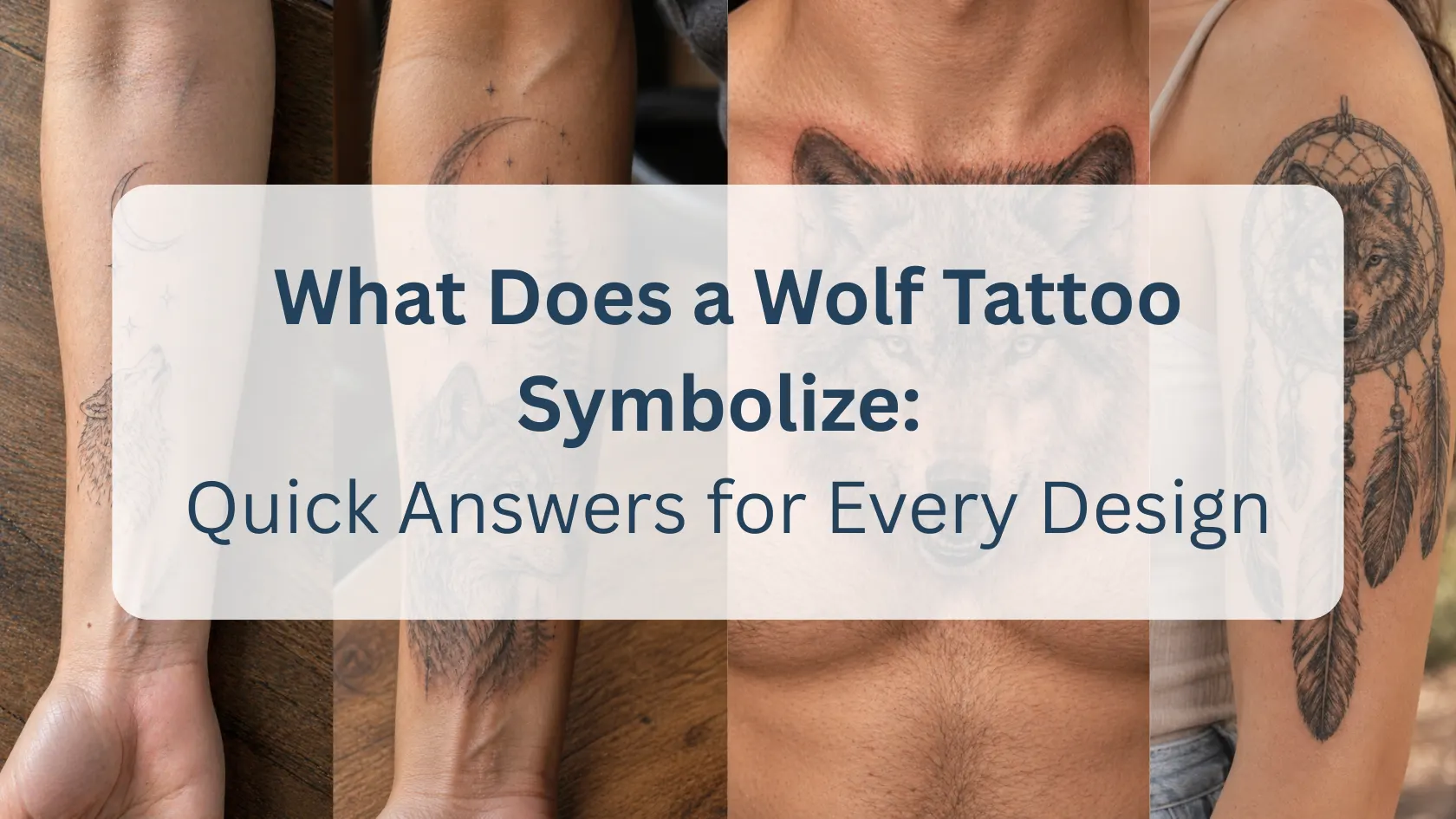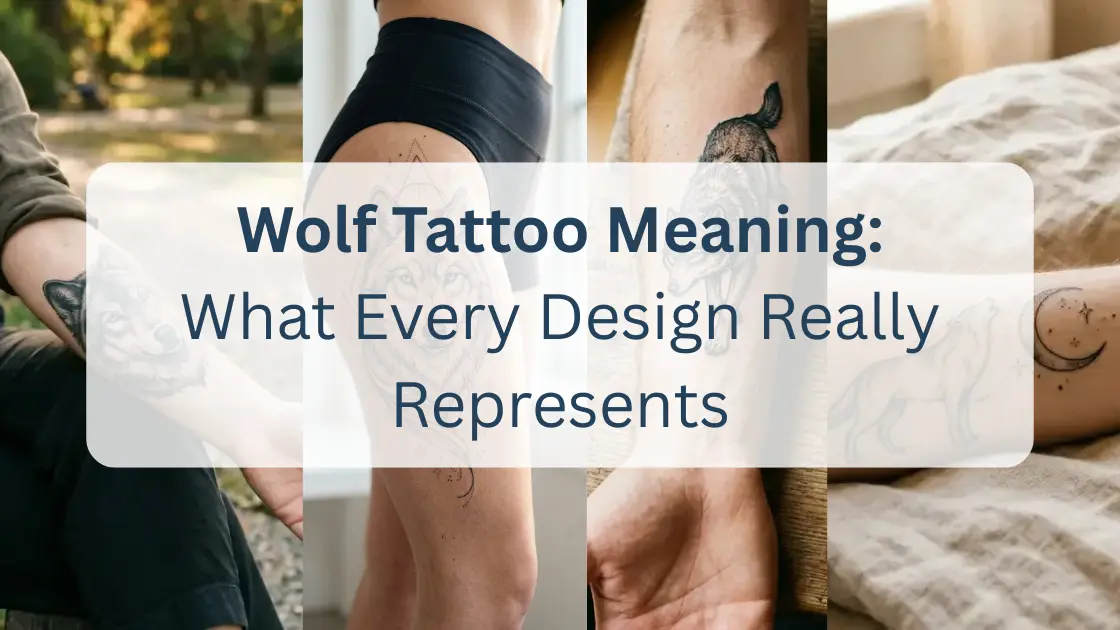

Most people assume a lone wolf tattoo just means independence. And it does, partly. But the full lone wolf tattoo meaning has more going on than that one word covers.
In nature, a lone wolf is an animal between chapters. It left its pack (or got pushed out), and it hasn't found a new one yet. It's surviving on its own in conditions that wolves weren't really built to handle alone. That's not just independence. That's resilience, transition, and the willingness to go through something hard because something better might be on the other side.
That's the real reason this tattoo connects with so many people. It's not about wanting to be alone. It's about being able to handle it.
Table of Contents
Three Ways to Read the Lone Wolf Tattoo Meaning
Not every lone wolf tattoo tells the same story. The meaning shifts depending on which part of the lone wolf's journey you connect with.
Independence by Choice
Some wolves leave the pack on their own terms. Usually it's a young wolf that's reached maturity and strikes out to find new territory. It's not running away. It's outgrowing where it's been.
This is the most common version people go for. It fits anyone who made a deliberate choice to do things their own way. Quitting a job that felt wrong. Leaving a relationship that wasn't working. Moving somewhere new with no safety net. The tattoo marks that choice and the confidence behind it.
Survival After Loss
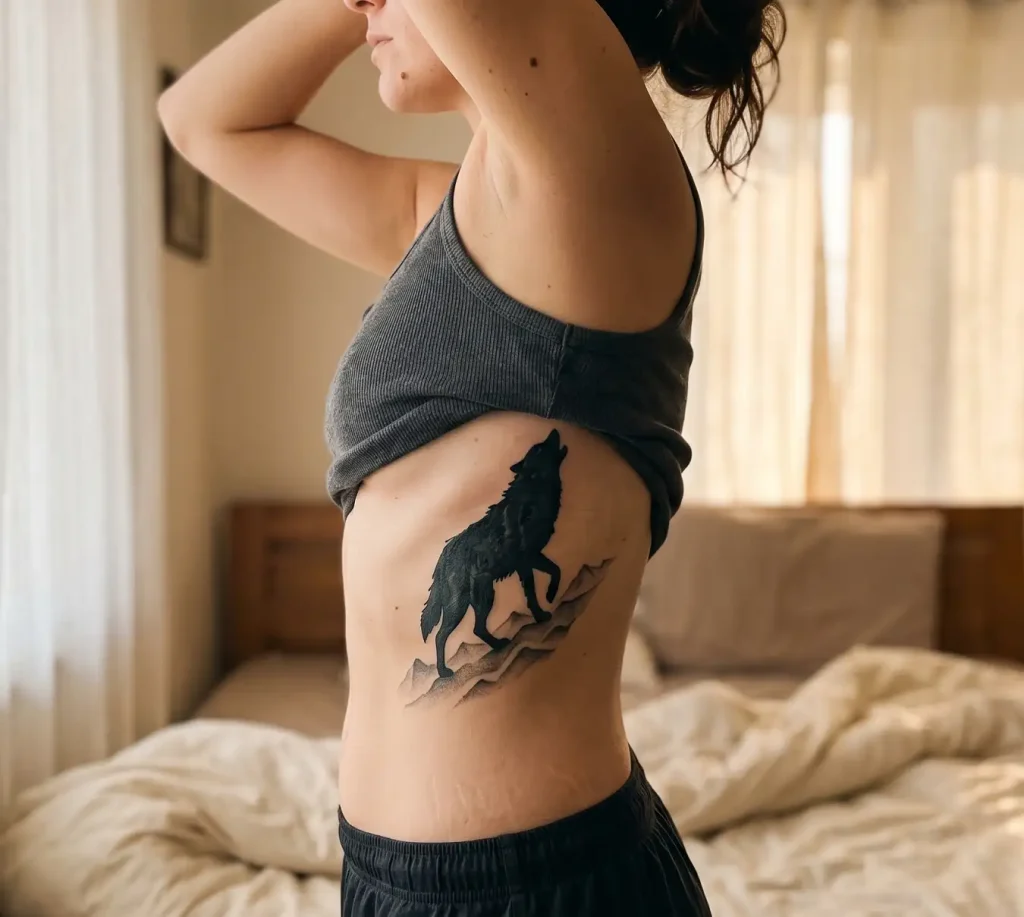
Not every lone wolf chose to be alone. Some lost their pack to conflict, disease, or circumstance. They didn't plan for solitude. It happened to them. And they survived anyway.
This version of the lone wolf tattoo meaning is about resilience after loss. The end of a marriage. The death of someone close. Being cut off from a group you depended on. The tattoo doesn't celebrate being alone. It honors the fact that you got through it.
It's a heavier meaning than the first version, and the people who carry it usually know exactly why they chose it.
The In-Between
Here's what a lot of articles leave out. In nature, the lone wolf phase is usually temporary. The wolf crosses unfamiliar territory alone, and eventually either joins a new pack or finds a mate and starts one.
So the lone wolf isn't a permanent identity. It's a phase. A difficult, necessary phase between where you were and where you're going.
This meaning connects with people in the middle of major transitions. Not done healing yet. Not sure what's next yet. But moving. The tattoo doesn't say "I'm here forever." It says "I'm passing through, and I'll come out the other side."
What a Lone Wolf Tattoo Doesn't Mean
Quick clarification, because this comes up a lot.
A lone wolf tattoo doesn't mean antisocial. It doesn't mean you hate people or think you're better than everyone. Wolves are social animals. A wolf alone is outside its comfort zone. It would prefer a pack. It's built for connection.
The tattoo isn't about rejecting community. It's about proving you can survive without it when you have to. That's a different thing.
Lone Wolf Tattoo Meaning for Men and Women
The core meaning stays the same regardless of gender. But the personal context often points in different directions.
For men, the lone wolf tattoo tends to be about self-sufficiency and quiet toughness. Handling something alone that you didn't talk about publicly. There's also a protector angle. The lone wolf who left the pack not because he was weak, but because he was strong enough to survive what came next.
For women, it often connects to independence from bad situations. Walking away from a controlling relationship. Breaking free from expectations. Choosing yourself over a group that wasn't good for you. The she-wolf walking alone carries a specific kind of quiet defiance.
Both versions share the same root: you proved something to yourself, and the tattoo is the reminder.
Design Elements That Shape the Meaning
The specific design choices around your lone wolf tattoo push the meaning in different directions. A few common ones:
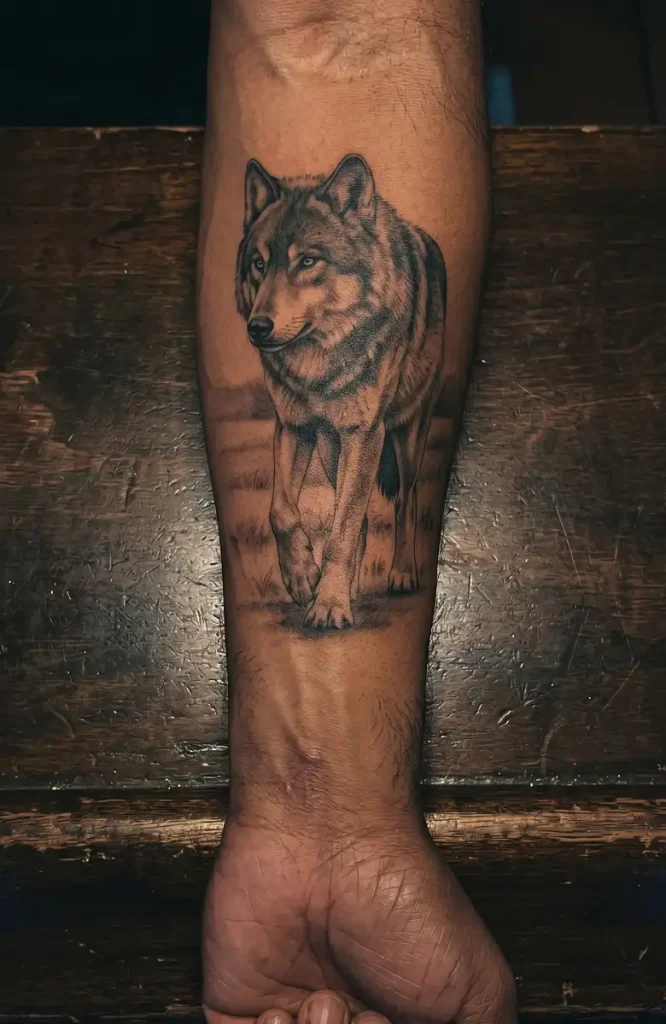
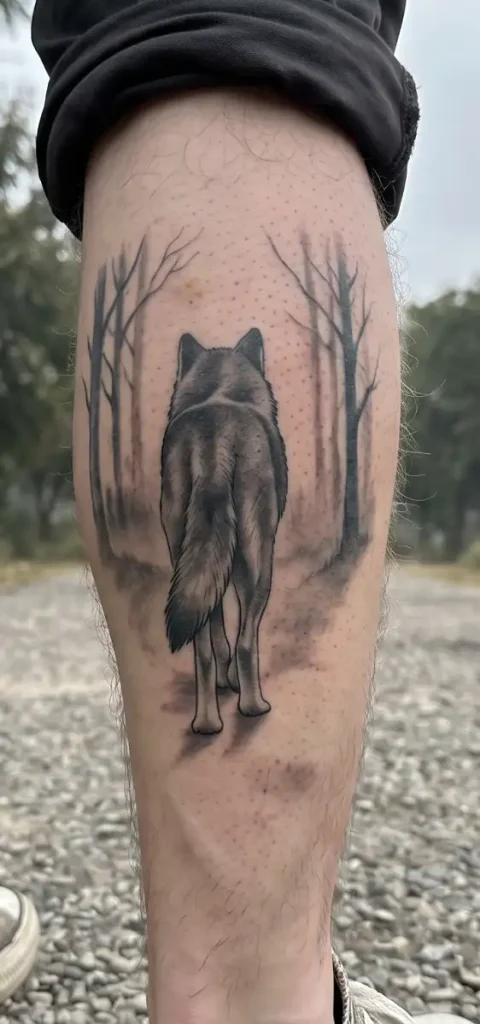
- A wolf walking through snow or an empty landscape is the purest lone wolf composition. One animal, open space, forward motion. Emphasizes the journey itself.
- A wolf looking back over its shoulder adds a sense of leaving something behind. People who've walked away from a past life often choose this pose.
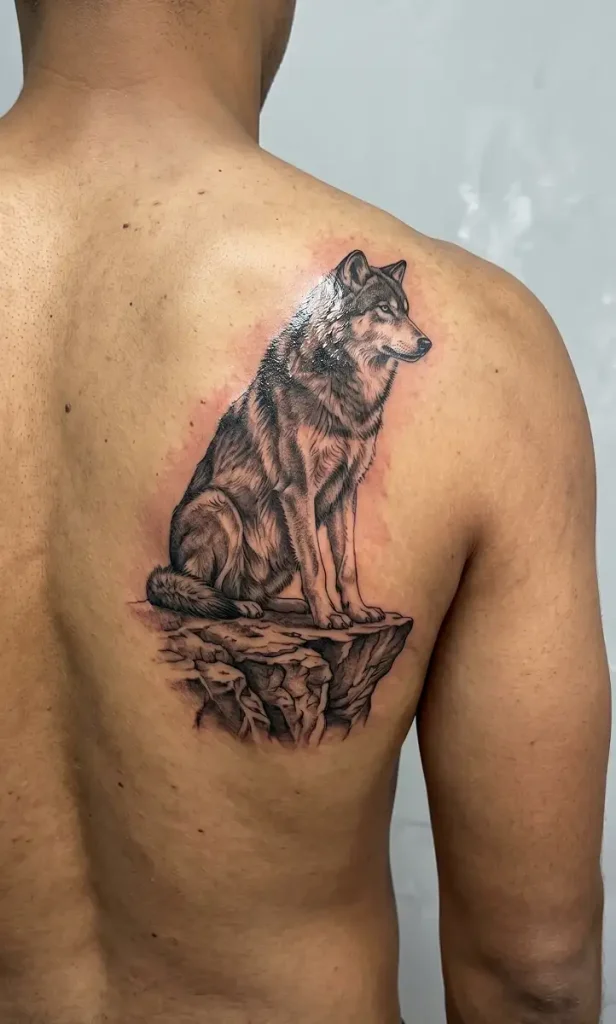
- A wolf standing on a ridge or cliff looking outward is more contemplative. Not mourning what's behind. Scanning what's ahead.
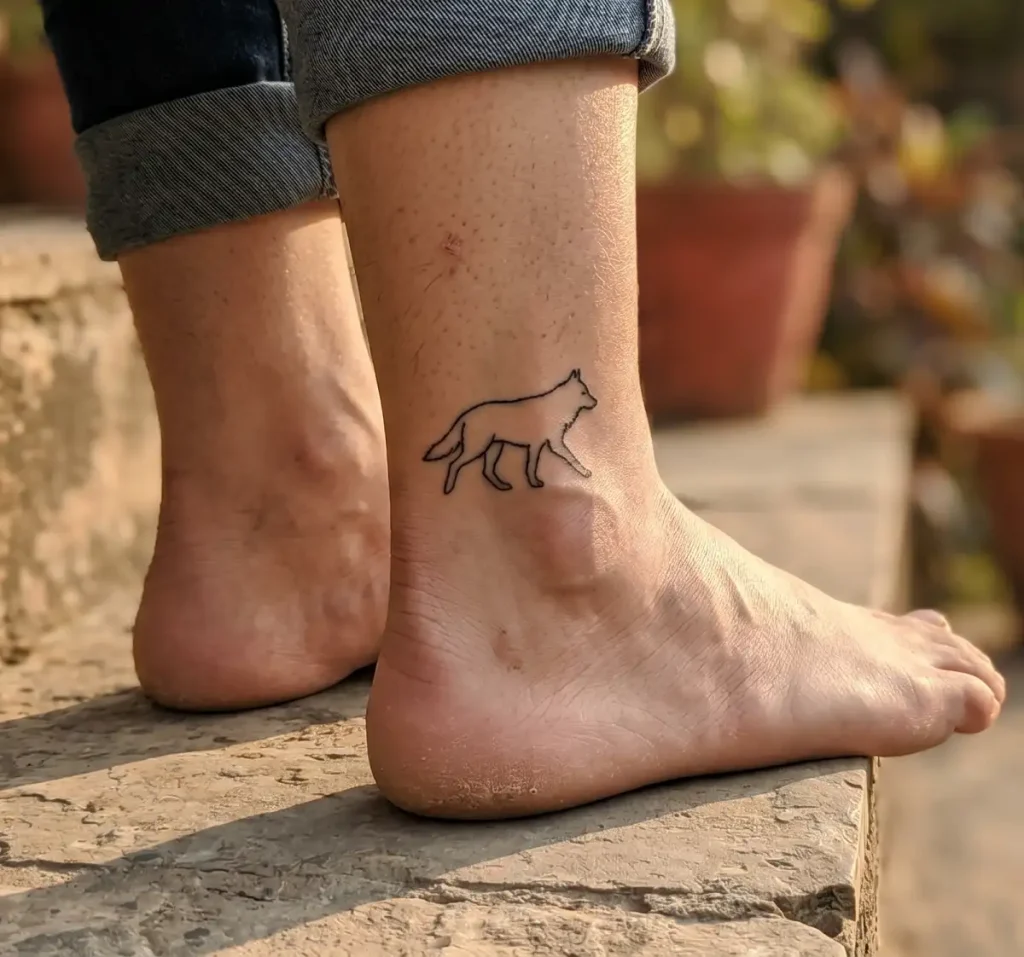
- A wolf silhouette against a bare horizon keeps things minimal. Reads as lone wolf instantly from any distance and works well as a smaller piece.
- A howling lone wolf under a moon adds the howling wolf's meaning: finding your voice, calling out across distance, on top of the lone wolf symbolism. Two layers in one design.
Good Placements for a Lone Wolf Tattoo
The lone wolf works at a lot of different sizes, so placement is flexible.
Forearm is the most popular. Good visibility, manageable pain, and enough space for a walking wolf composition with some background detail.
Ribcage is a more private option. It hurts more, but some people feel that fits. The lone wolf journey wasn't comfortable either. You only show it when you choose to.
Shoulder blade or upper back works well for cliff-perched or outward-looking poses. Bigger canvas for scenic elements.
Wrist, ankle, or behind the ear all work for a minimalist silhouette. Less detail, same meaning.
Frequently Asked Questions
Q: What does a lone wolf tattoo mean?
A lone wolf tattoo represents self-reliance, resilience, and the ability to survive on your own when circumstances require it. The specific meaning ranges from chosen independence (walking your own path) to survival after loss (getting through something hard alone) to transition (being between chapters in life).
Q: Is a lone wolf tattoo negative?
No. It doesn't mean you're antisocial or that you reject other people. Wolves are social animals. A lone wolf is an animal outside its comfort zone, handling a difficult situation. The tattoo honors that strength. It's not a rejection of connection.
Q: What's the difference between a lone wolf tattoo and a wolf pack tattoo?
They represent opposite sides of the wolf's nature. Lone wolf: independence and personal strength. Wolf pack: family loyalty and group protection. Some people connect with both at different times in their life.
Q: Where should I get a lone wolf tattoo?
Forearm is the most common and versatile. Ribcage for something private. Shoulder blade for larger scenic designs. Wrist or ankle for a small minimalist silhouette. Choose based on size and how visible you want it.
It's a Chapter, Not a Label
The lone wolf tattoo meaning isn't really about being a loner. It's about a specific kind of strength that only shows up when you're on your own, by choice or by circumstance.
And for most people, just like for most wolves, the lone phase doesn't last forever. It's the hard stretch between what was and what's next. The tattoo marks that stretch so you don't forget what you were capable of when things were at their hardest.
For broader wolf symbolism, head back to our wolf tattoo meaning guide. When you're ready to look at actual designs, our lone wolf tattoo designs page covers styles from realistic to minimalist to tribal.