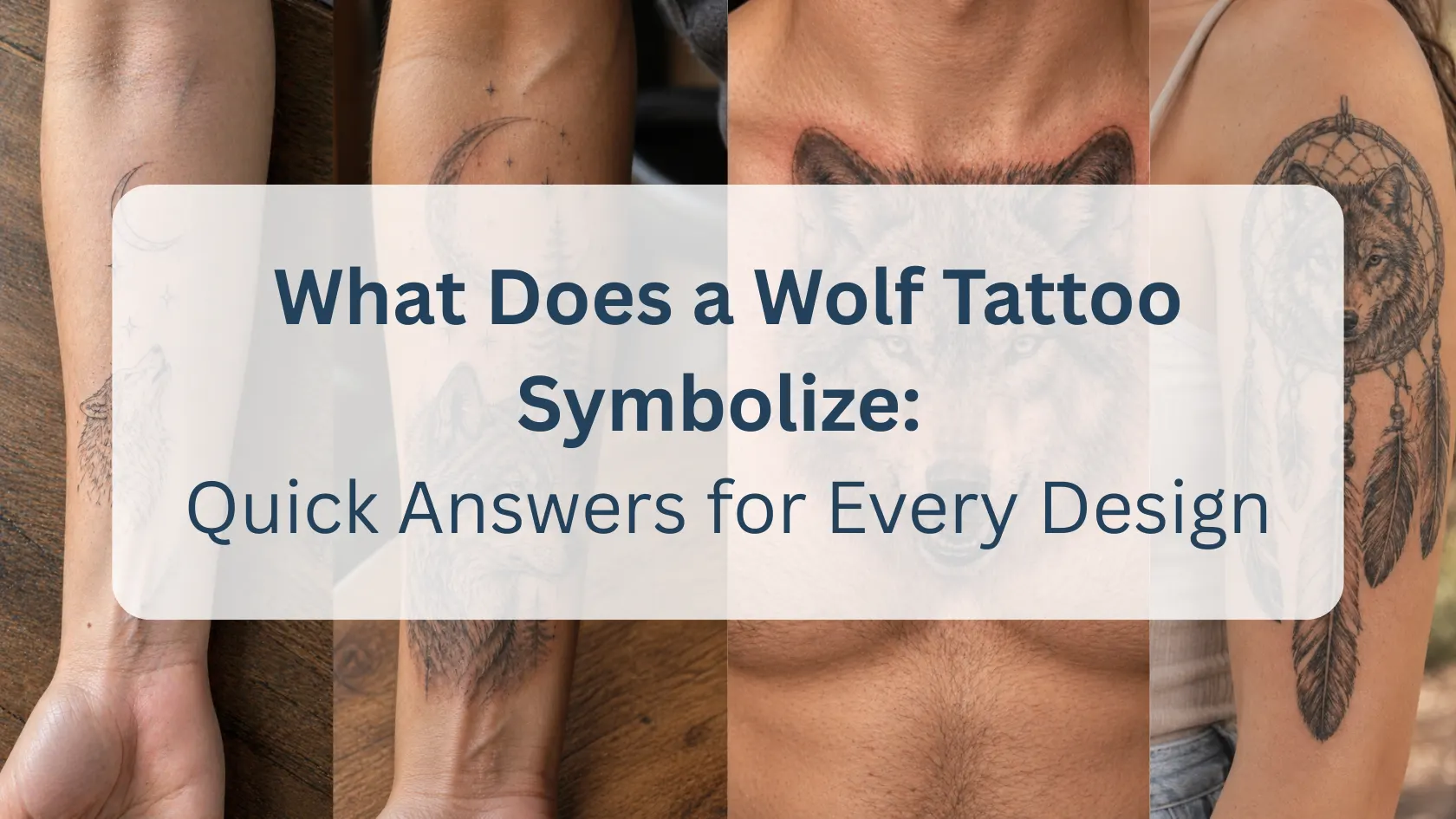
If you're looking for a fast answer: a wolf tattoo generally symbolizes loyalty, strength, independence, and instinct. Those four come up in almost every wolf design.
But the specific symbolism changes a lot depending on which type of wolf tattoo you're looking at. A lone wolf doesn't symbolize the same thing as a wolf pack. A howling wolf is different from a wolf skull. A Japanese wolf carries different weight than a Norse one.
This page gives you the quick version for each common design. If you want the full deep dive on any of them, we link to the detailed guides throughout.
Table of Contents
The Short Answer: What Does a Wolf Tattoo Symbolize?
At its core, a wolf tattoo symbolizes the balance between two sides of the same nature. Wolves are pack animals: deeply loyal, social, cooperative. And they're also capable of surviving completely alone in harsh conditions. That tension between community and independence is what makes the wolf such a strong tattoo symbol.

People who get wolf tattoos almost always connect with one side of that balance more than the other. Some see the loyal pack animal. Others see the independent survivor. Some see both. The design they choose tells you which side they're emphasizing.
What Each Wolf Tattoo Design Symbolizes
Here's the breakdown by design type. Quick answers, then links if you want more.
Lone Wolf
Symbolizes: independence, self-reliance, resilience, walking your own path.
The lone wolf is the most popular variation. It's for people who've handled something difficult on their own, or who chose to leave a situation that wasn't right and build something better. It's not about being antisocial. It's about proving you can stand on your own when you need to.
Wolf Pack
Symbolizes: family loyalty, protection, unity, unconditional bonds.
The opposite of the lone wolf. A pack tattoo is about the people you'd do anything for. Your family, your closest circle. The number of wolves in the design sometimes matches the number of people it represents.
Alpha Wolf
Symbolizes: leadership, responsibility, quiet strength, protection.

Used to be mostly about dominance and aggression. The meaning has shifted. Modern understanding of wolf packs shows that the alpha is usually just a parent: someone who leads through decision-making and sacrifice, not fighting. The tattoo has evolved to match.
Howling Wolf
Symbolizes: expression, finding your voice, communication, calling out to your people.
Wolves howl to communicate across long distances and to bring the pack together. As a tattoo, it represents speaking up after being silent, expressing what's inside you, or reconnecting with people who matter. Often paired with a moon, which adds mystery and intuition to the meaning.
Wolf Eyes
Symbolizes: intuition, perception, seeing through deception.
Just the eyes, no full face, no body. This design is about awareness. Reading people and situations accurately. Trusting your gut. Popular with people who rely on instinct in their daily life.
Wolf Skull
Symbolizes: transformation, the death of an old identity, rebirth.
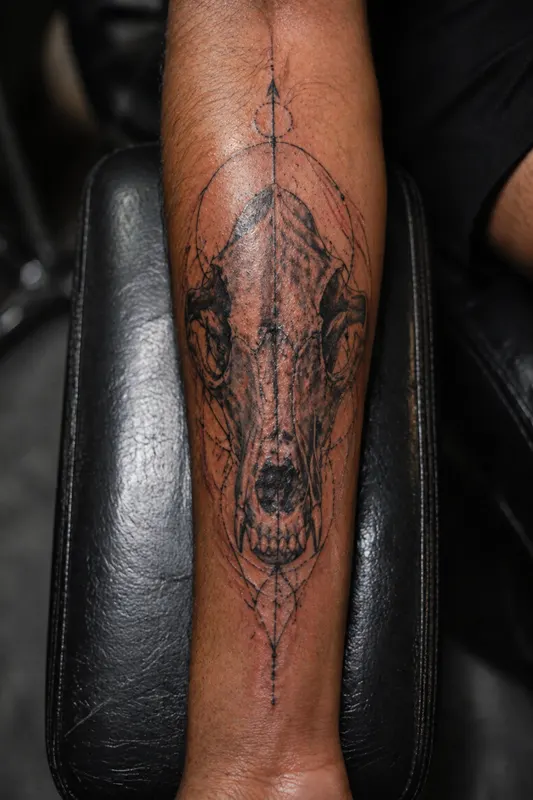
Not about literal death. A wolf skull tattoo represents leaving behind a version of yourself that no longer exists. Common with people in recovery, survivors of serious illness, or anyone who feels like they've already lived more than one life.
Wolf and Moon
Symbolizes: instinct vs. reflection, cycles, mystery, the subconscious.
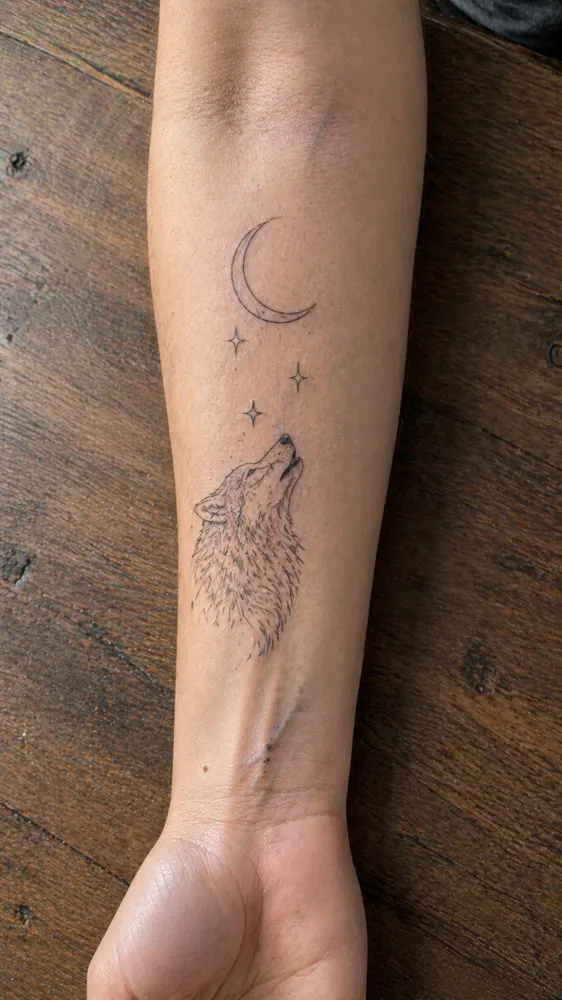
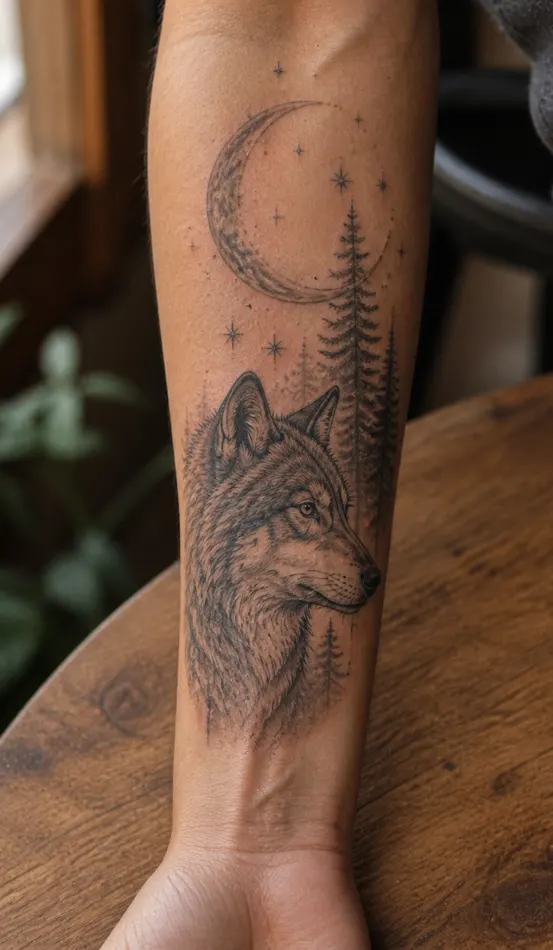
One of the most popular wolf combinations. The moon brings feminine energy, intuition, and a sense of mystery. Together with the wolf, you get a balance between the wild and the contemplative. Works in almost every tattoo style.
Wolf Paw Print
Symbolizes: guidance, presence, the wolf's path, memorial.
The subtlest wolf tattoo option. The paw print represents the wolf without showing the wolf itself. Often chosen as a memorial: someone who's passed still walking beside you. Also used to represent the path you're on.
Wolf in Sheep's Clothing
Symbolizes: hidden strength, duality, strategic restraint.

The traditional meaning is a warning about hidden threats. But most people who get this tattoo are describing themselves: calm on the surface, serious power underneath. It's about knowing when to show what you're capable of and when to hold it back.
She-Wolf / Mother Wolf
Symbolizes: fierce motherhood, feminine power, nurturing and dangerous in equal measure.
The she-wolf archetype has become a strong symbol in feminine tattoo culture. It represents a woman who protects her own, doesn't apologize for her strength, and balances wildness with care. Designs often show a wolf with cubs or a female wolf with softer features but an alert, protective stance.
Spirit Wolf / Dreamcatcher Wolf
Symbolizes: spiritual guidance, ancestral wisdom, trusting your instincts.
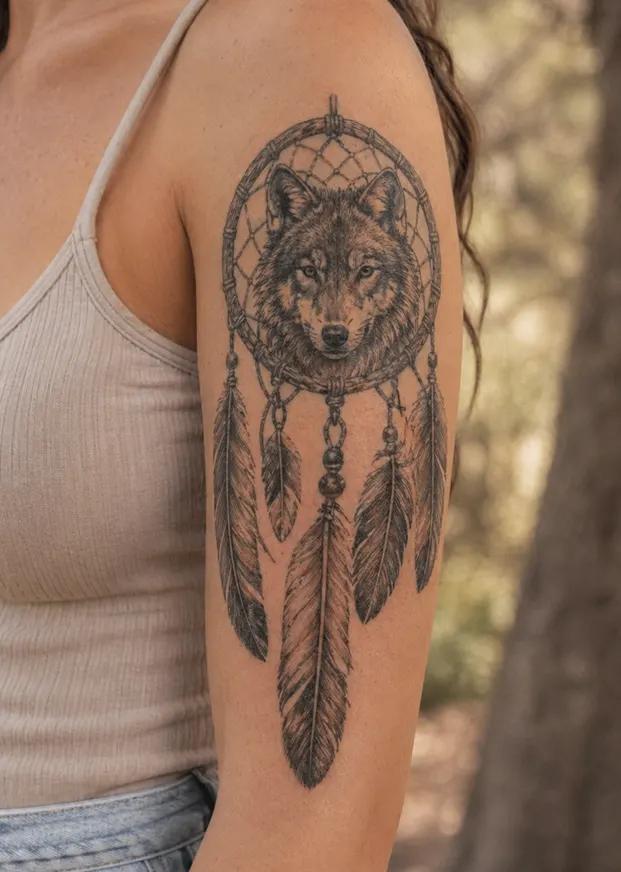
In shamanic traditions, the wolf is a spirit guide. It teaches you to trust your gut, find your path, and balance independence with community. Designs often include dreamcatchers, feathers, celestial elements, or forest backgrounds. The wolf is shown as a guide, not a predator: calm eyes, moving through nature.
Wolf Tattoo Symbolism: Quick Reference
| Design | Symbolizes |
|---|---|
| Lone wolf | Independence, resilience, self-reliance |
| Wolf pack | Family loyalty, protection, unity |
| Alpha wolf | Leadership, quiet strength, sacrifice |
| Howling wolf | Expression, finding your voice |
| Wolf eyes | Intuition, perception, awareness |
| Wolf skull | Transformation, rebirth, mortality |
| Wolf + moon | Mystery, cycles, instinct vs. reflection |
| Wolf paw | Guidance, memorial, the wolf's path |
| Wolf in sheep's clothing | Hidden strength, duality |
| She-wolf | Fierce motherhood, feminine power |
| Spirit / dreamcatcher wolf | Spiritual guidance, ancestral wisdom |
Does the Cultural Style Change What a Wolf Tattoo Symbolizes?
Yes. A Norse wolf tattoo carries symbolism tied to Fenrir, Ragnarök, and untamable power. A Japanese wolf tattoo symbolizes divine protection and guardianship. A Celtic wolf is about spiritual guidance and the connection between worlds. The same animal, filtered through different mythologies, produces very different meanings.
If a specific culture's wolf symbolism speaks to you, our style guides cover each tradition in detail.
Does Color Change the Symbolism?
A little. A black wolf leans toward mystery, shadow, and the darker side of instinct. A white wolf usually represents spiritual purity, uniqueness, or guidance. Grey is the most common and carries the broadest meaning.
But honestly, the design and pose matter more than color. A snarling grey wolf and a calm grey wolf tell very different stories regardless of the palette.
Does Placement Change What It Symbolizes?
Not directly. A wolf means the same thing on your arm as it does on your chest. But placement affects visibility and intention. A wolf on the forearm is visible to everyone: it's a public statement. A wolf on the ribs is private: it's a personal reminder. A wolf on the back can hold a full scene. A wolf on the wrist stays subtle.
The meaning stays the same. The way you share that meaning with the world changes.
Frequently Asked Questions
Q: What does a wolf tattoo symbolize?
A wolf tattoo symbolizes loyalty, strength, independence, and instinct. The specific symbolism depends on the design: a lone wolf represents self-reliance, a pack represents family bonds, a howling wolf represents finding your voice, a skull represents transformation. Cultural context (Norse, Japanese, Celtic) adds additional meaning.
Q: Is a wolf tattoo spiritual?
It can be. In shamanic traditions, the wolf is a spirit guide that teaches intuition, path-finding, and balance between independence and community. Designs with dreamcatchers, feathers, or celestial elements lean into the spiritual side. But plenty of wolf tattoos are purely about personal strength or family with no spiritual dimension.
Q: What does a wolf tattoo symbolize for a woman?
For women, wolf tattoos often symbolize independence, intuition, fierce motherhood, and inner strength. The she-wolf archetype: wild, protective, unapologetically powerful, is especially popular. But the core symbolism is the same regardless of gender.
Q: Do wolf tattoos have a negative meaning?
Generally, no. In most cultures, the wolf is a positive symbol representing strength, loyalty, and guidance. Norse mythology gives wolves both protective and destructive roles (Odin's loyal wolves vs. Fenrir), but the overall symbolism is respected rather than feared. There's no widespread belief that wolf tattoos carry bad luck or negative energy.
Your Design Tells Your Story
What a wolf tattoo symbolizes comes down to which wolf you choose. Lone wolf, pack, alpha, howling, skull, moon, paw: each one tells a different story about a different part of the wolf's nature. And that's why people keep choosing this animal over every other option. There's always a version that fits.
For the complete guide to wolf tattoo symbolism, see our wolf tattoo meaning page. For design options once you know your meaning, check out our wolf tattoo designs guide.