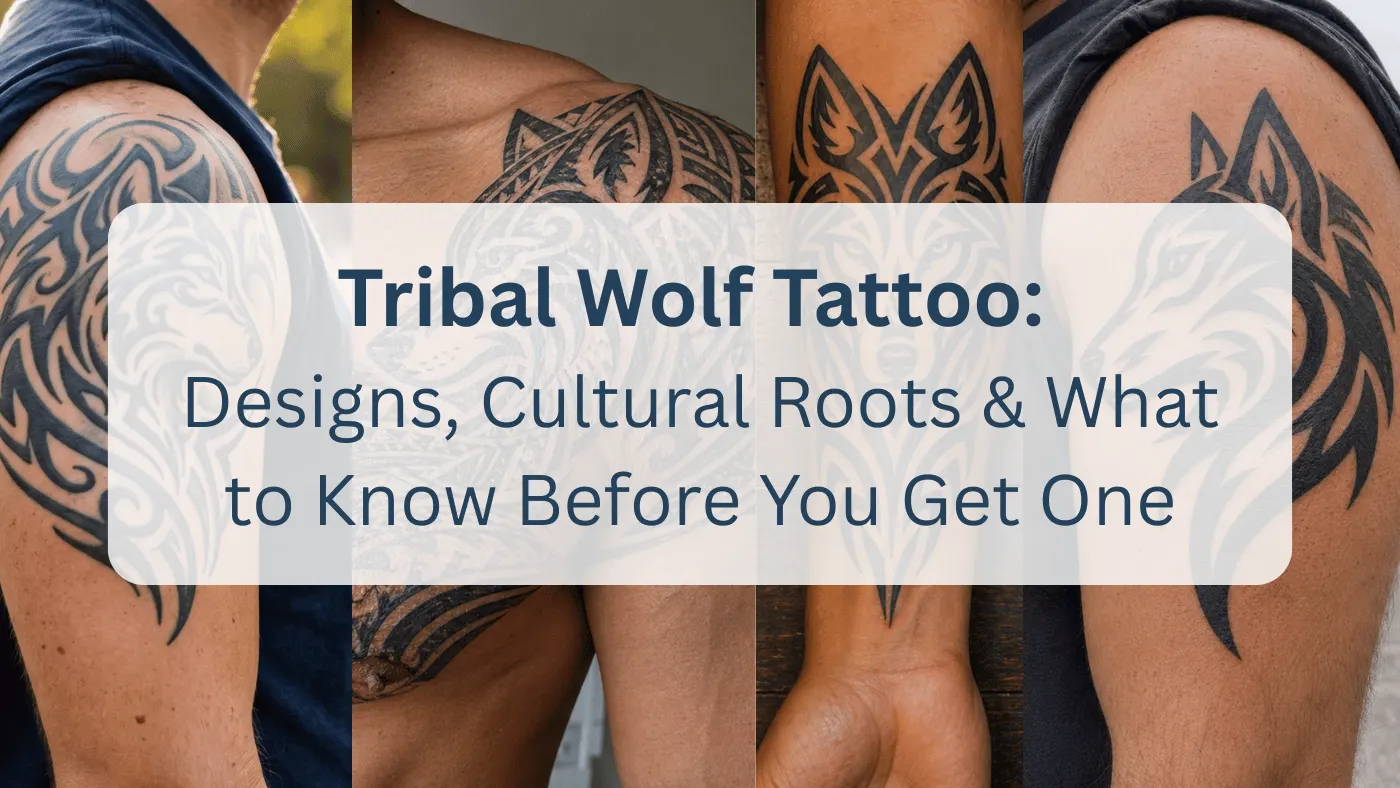
The tribal wolf tattoo has been popular for a long time, and for good reason. Bold black lines, clean shapes, strong visual impact. You can spot one from across the room. It ages better than almost any other style. And when it's done right, it looks genuinely impressive.
The problem is when it's not done right. A lot of tribal wolf tattoos are generic templates pulled off the internet, cookie-cutter designs that looked outdated ten years ago and haven't improved since. The difference between a great tribal wolf and a forgettable one comes down to the artist, the cultural roots behind the design, and how well it's shaped to fit your actual body.
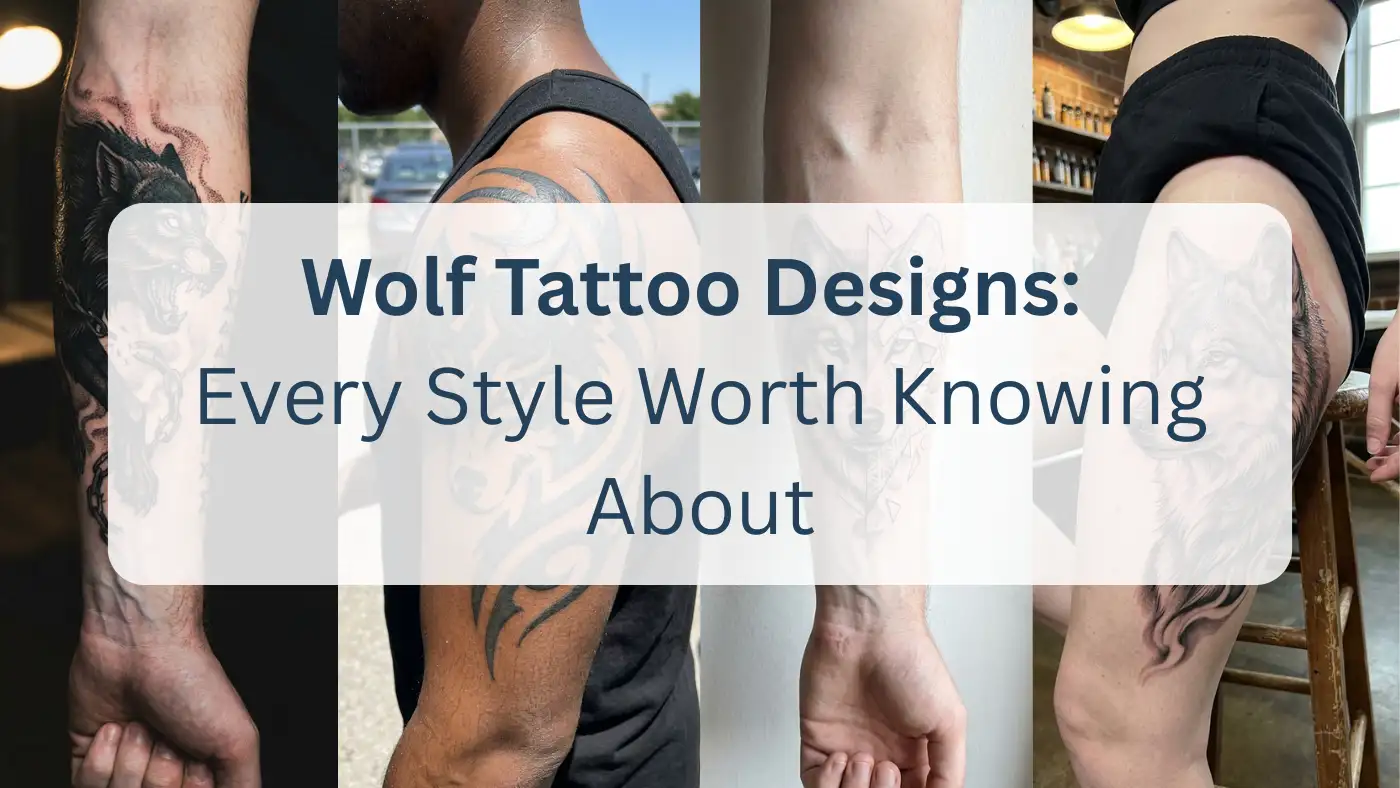
This guide covers the different tribal styles, what makes each one unique, and how to end up with a piece you're actually proud of. For all wolf tattoo styles in one place, see our wolf tattoo designs guide.
Table of Contents
What Makes a Wolf Tattoo "Tribal"?
Tribal tattooing uses bold black ink, strong lines, and negative space to create designs. There's no shading, no color fills, no fine detail work. The image is built from shapes: thick curves, sharp points, flowing patterns that follow the body's contours.
For a wolf, this means the animal's form is suggested through those shapes rather than drawn realistically. You might see the outline of a wolf's head formed by sweeping tribal curves, or a full wolf silhouette built from interlocking pointed patterns. The wolf is there, but it's constructed from the tribal design language rather than drawn in traditional detail.
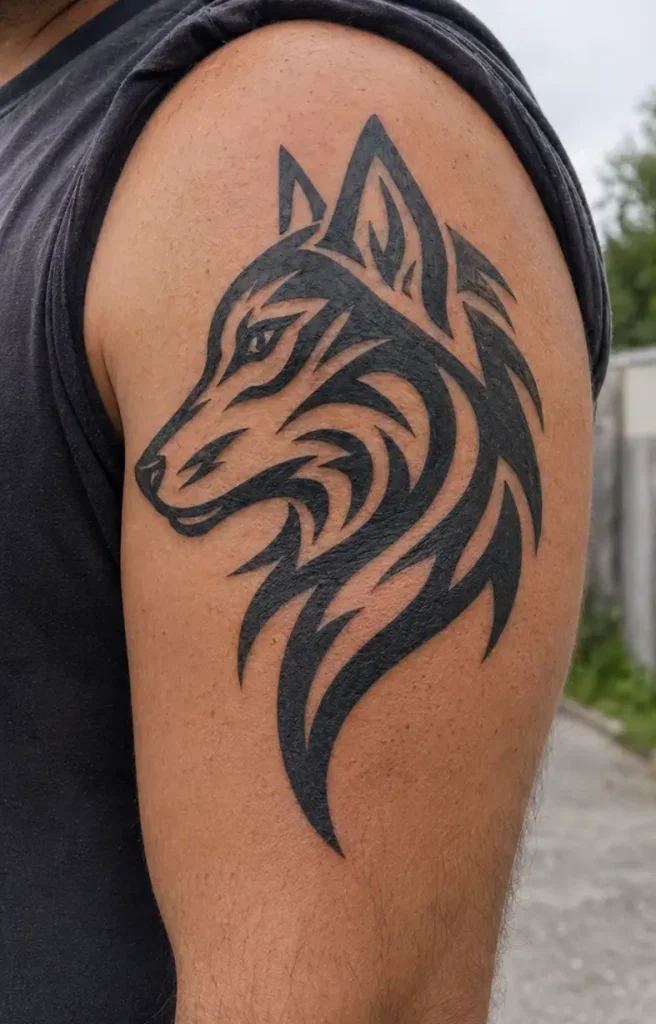
That's why tribal wolf tattoos look so different from realistic or traditional ones. You're not looking at a picture of a wolf. You're looking at the idea of a wolf expressed through pattern and shape.
Different Tribal Traditions (They're Not All the Same)
One of the biggest mistakes people make with tribal tattoos is treating "tribal" as a single style. It's not. There are dozens of distinct tribal tattooing traditions around the world, and they look quite different from each other.
Polynesian / Maori
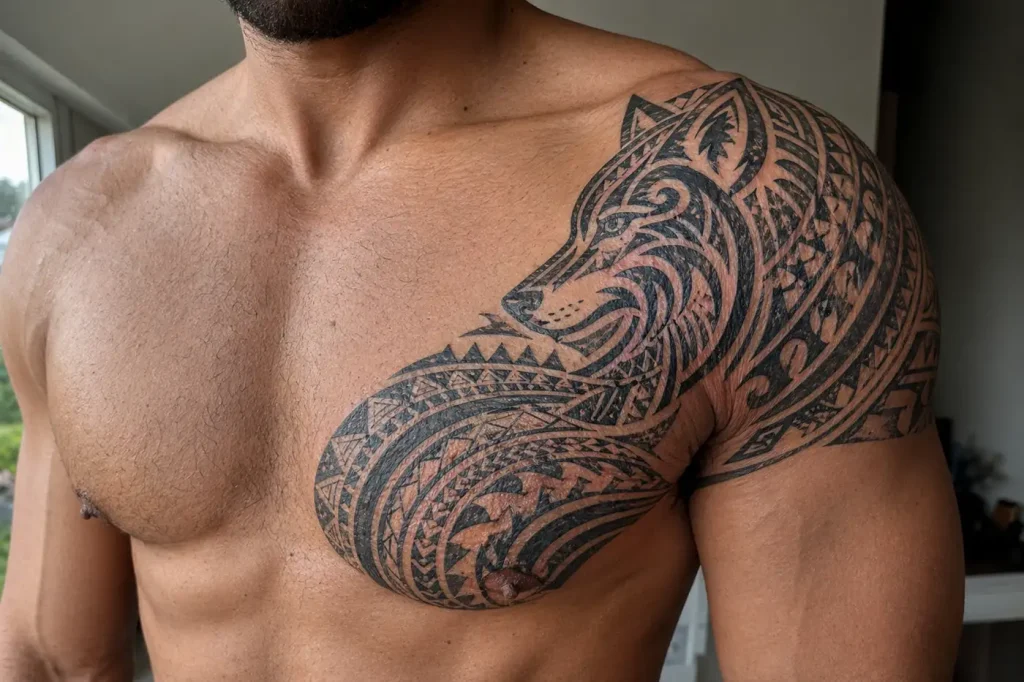
Polynesian tribal is probably what most people picture when they think "tribal tattoo." Thick black patterns, curved shapes, geometric fills. Maori tā moko uses spirals and flowing curves that follow the body's muscle structure. These traditions have deep cultural significance. The patterns often tell specific stories about lineage, achievements, and identity. A wolf isn't a traditional Polynesian subject, but the design language translates well.
Haida / Pacific Northwest
Haida art from the Pacific Northwest coast has a very specific look: bold formline design with ovoid shapes, U-forms, and split representations where you see both sides of the animal at once. The wolf is actually a significant figure in Haida mythology. If this tradition connects with you culturally, it's worth finding an artist who genuinely understands formline art rather than imitating it loosely.
Borneo / Southeast Asian
Borneo tribal uses spiraling patterns, rosettes, and flowing organic shapes. The overall feel is more curvilinear than Polynesian: less angular, more fluid. These designs wrap around the body beautifully because the patterns naturally follow limb shapes.
Modern / Fusion Tribal
Most tribal wolf tattoos people get today aren't tied to a specific cultural tradition. They borrow visual elements from various tribal styles and combine them into something new. This is fine as long as the design is custom and well-executed. Where it goes wrong is when people grab a generic tribal template that doesn't reference any tradition and doesn't fit their body.

How Tribal Wolf Tattoos Age
This is where tribal has a real advantage over most other styles. Solid black ink holds better than anything else in tattooing. There's no fine detail to blur, no color to fade, no shading to muddy up. What you see on day one is pretty close to what you'll see in 20 years.
The edges soften slightly over time. Every tattoo does that. But because tribal lines are thick to begin with, that softening barely changes the overall look. A tribal wolf from 2005 still reads as a tribal wolf. Try saying that about a small watercolor piece.
The one thing that can go wrong is blowout, where ink spreads under the skin and creates a blurry halo around the lines. This usually happens because the artist went too deep or the skin in that area is thin. A good tribal artist knows how to avoid it.
Best Placements for a Tribal Wolf Tattoo
Tribal designs need space. The bold lines and negative space patterns lose their impact when they're compressed into a small area. Here are the placements that work best.
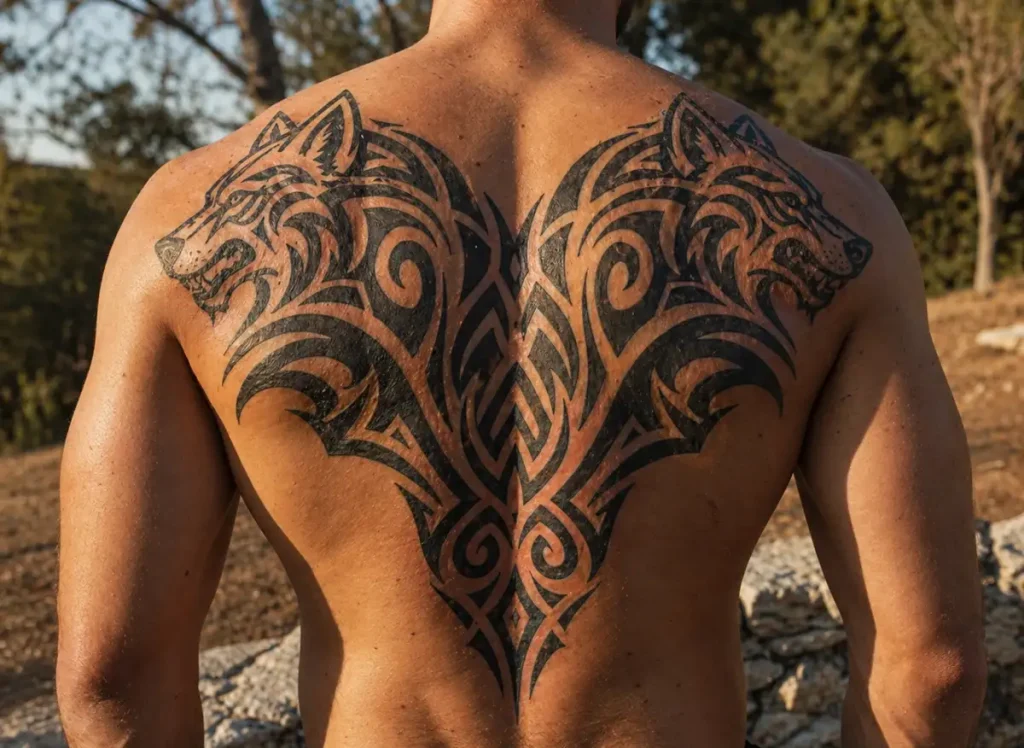
Upper arm and shoulder are the classic tribal placement. The deltoid is a natural canvas for a wolf head, and the patterns can wrap onto the shoulder cap and upper back for a seamless look.
Chest panels work well for larger tribal wolf compositions, especially designs that spread from the pec toward the shoulder or sternum.
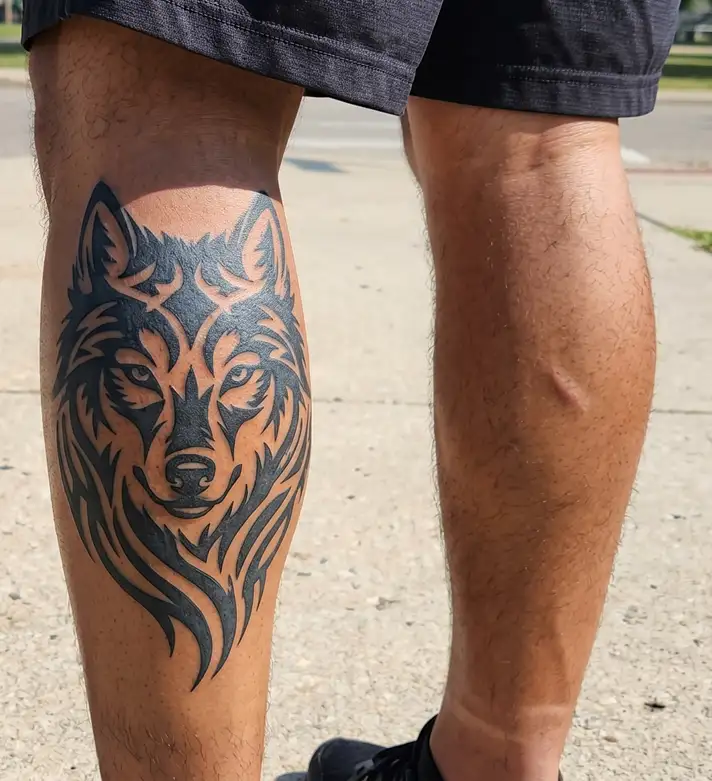
Calf is an underrated tribal spot. The muscle shape gives the pattern something to follow, and the calf is big enough for real detail without the pain levels of the ribs or chest.
Forearm works for medium-sized designs, but keep it simple. A full tribal wolf with lots of surrounding pattern needs more room than a forearm usually offers.
Avoid: wrist, ankle, behind the ear. Tribal designs lose everything at small sizes.
How to Avoid a Generic Tribal Wolf Tattoo
This is the real talk section. Tribal wolf is one of the most searched tattoo designs on the internet, which means there are thousands of identical templates floating around. If your artist opens Google Images, picks the first tribal wolf that comes up, prints it, and starts tattooing, you're going to end up with the same tattoo that hundreds of other people already have.
Here's how to avoid that.
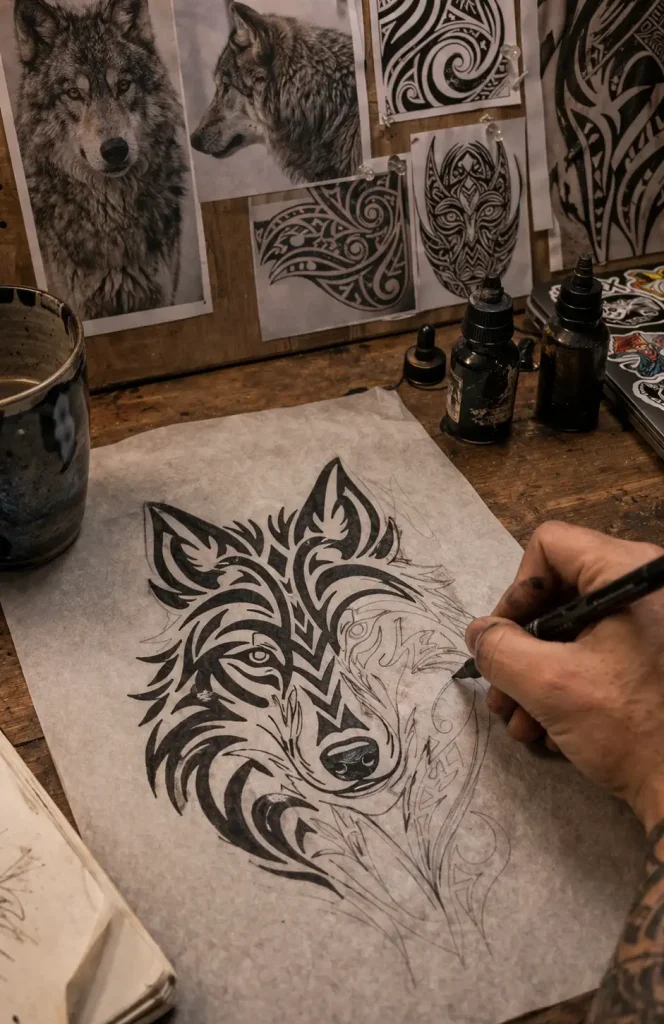
First, find an artist who draws custom tribal work. Not someone who can trace a template, but someone who actually designs original tribal patterns. Ask to see their sketchwork, not just finished tattoos.
Second, have the design shaped to your body. A great tribal tattoo follows the curves and contours of whatever body part it sits on. That means the design should be drawn onto your skin (or a photo of your skin) during the planning phase, not pulled from a flat template.
Third, if you want to reference a specific cultural tradition, learn about it. A Polynesian-influenced tribal wolf means more when you understand what the patterns represent. And if you have actual cultural heritage connected to a tribal tradition, an artist who understands that tradition will give you something far more meaningful than a generic fusion.
Fourth, look at the artist's other tribal work. If all their tribal pieces look the same, they're probably working from templates. If each one looks different and clearly fits the client's body shape, that's a good sign.
What Does a Tribal Wolf Tattoo Mean?
Tribal wolf tattoos carry the same core wolf meanings: loyalty, strength, independence, instinct, with an added layer of heritage and primal connection.
The tribal element adds something that other styles don't. It connects the wolf to something ancient and ancestral. Even in modern fusion tribal, there's an energy that feels rooted in something older than the person wearing it. That's part of the appeal. The wolf is already a powerful symbol, and the tribal aesthetic amplifies the sense of deep, old-world significance.
For people with actual ties to a tribal tradition, the meaning goes deeper. It's not just a wolf tattoo. It's a cultural statement expressed through a culturally significant art form. For the full breakdown of wolf symbolism across every design, see our wolf tattoo meaning guide.
Tribal Wolf vs. Other Wolf Tattoo Styles
Tribal and realistic are probably the two most common wolf tattoo styles, and they couldn't be more different. Realistic gives you a photograph on skin. Tribal gives you an icon. One is about detail, the other is about shape and impact.
Tribal vs. Celtic is a closer comparison. Both use bold black patterns and both carry cultural weight. But Celtic knotwork is specifically about interlocking loops and endless paths, while tribal encompasses a much wider range of pattern types.
Tribal vs. blackwork is worth mentioning too. Blackwork fills large areas with solid black ink and uses negative space for detail. Tribal uses negative space more aggressively. The empty space between the lines IS the design as much as the ink itself.

Frequently Asked Questions
Q: What does a tribal wolf tattoo mean?
A tribal wolf tattoo carries the standard wolf meanings: loyalty, strength, independence, with an added sense of heritage and primal connection. The tribal style gives it an ancestral, deep-rooted energy. For people with ties to a specific tribal tradition, the meaning extends to cultural identity and heritage.
Q: Do tribal wolf tattoos age well?
Yes, better than most styles. Solid black ink holds its shape for decades. There's no fine detail to blur and no color to fade. The edges soften slightly over time, but the thick lines keep the design readable for 20+ years with minimal maintenance.
Q: Where is the best placement for a tribal wolf tattoo?
Upper arm and shoulder (the classic spot), chest, upper back, and calf all work well. Tribal needs space to breathe. The bold patterns lose impact when compressed. Avoid very small placements like the wrist or ankle.
Q: How do I avoid getting a generic tribal wolf tattoo?
Find an artist who designs custom tribal work from scratch, not one who uses templates. Have the design shaped to your specific body part. If you want to reference a cultural tradition, learn about it and find an artist who understands it. Look at the artist's portfolio. Every piece should look different and fit the client's body.
Q: Is it culturally appropriate to get a tribal wolf tattoo?
This depends on the specific tradition. Modern fusion tribal that doesn't copy sacred patterns from a particular culture is generally considered fine. If you want to reference a specific tradition (Polynesian, Maori, Haida), do your research, approach it respectfully, and ideally work with an artist connected to that culture.
Bold Lines, Real Impact
A well-done tribal wolf tattoo is one of the most visually striking designs you can get. It reads from a distance, it ages like iron, and it carries a weight that subtler styles don't.
The key is making it yours. Custom design, proper placement, an artist who knows what they're doing with tribal work. Skip the templates, respect the cultural roots if you're referencing them, and give the design room to breathe on your body.

For more wolf tattoo styles, head back to our full wolf tattoo designs guide. For the meaning behind your wolf, check our wolf tattoo meaning page.