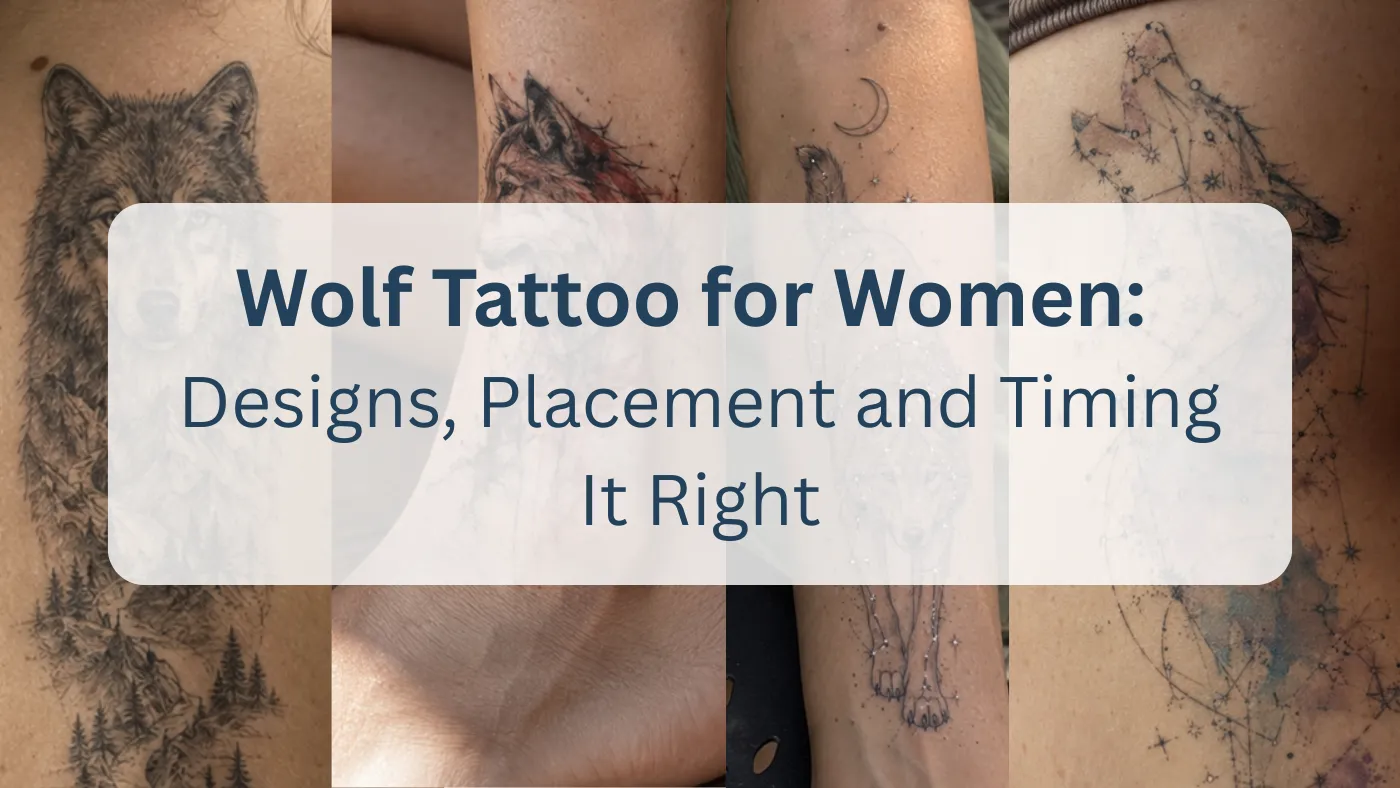

Wolf tattoos quietly became the most-inked animal for men over the past decade. They passed the lion, the tiger and the bear without anyone announcing it. Most of the men I've talked to about their wolf tattoos didn't pick the wolf because of Game of Thrones or some Pinterest trend. They picked it because the wolf carries opposite qualities at the same time. Loyal but dangerous. Pack animal but capable alone. Protective but predatory. That mix maps onto how a lot of men actually see themselves.
The problem with most "wolf tattoos for men" articles is that they're listicles. Thirty designs. Eighty designs. Two hundred designs. They don't help you decide. This guide does.
We're going to cover which wolf actually fits you, eight design variations beyond the standard wolf head portrait, the placements most articles ignore, and what it'll actually cost you. By the end you'll know the wolf you're getting before you call the artist.
Table of Contents
Why Men Keep Choosing the Wolf
Wolves show up in almost every culture's mythology. Norse legend gave us Fenrir and Odin's wolves Geri and Freki. Roman myth has Romulus and Remus raised by a she-wolf. Native American traditions place the wolf as a teacher and pathfinder. Japanese Shinto belief held wolves as protective spirits of travelers. Celtic mythology made the wolf a guide between worlds. Same animal, different stories. The through-line in all of them is respect.
What's shifted in the last decade is the framing. The simple "alpha male wolf" tattoo of the 2000s has been replaced with something quieter. Most men now describe meaning that's closer to family, survival, protection or a personal code than to dominance. The aggressive snarling wolf still exists, but it isn't the default anymore.
The Five Wolves: Which One Fits You
Most men's wolf tattoos fall into one of five identity types. The identity decides the design, not the other way around. Read these in order. One will land harder than the others.
1. The Pack Father

Common reason guys with kids get wolf tattoos. The pack imagery speaks directly to fatherhood. Protect, provide, stay close, hunt together. Designs typically show a wolf with cubs, a small pack walking in formation, or a single wolf with the names or birth years of family members worked into the composition.
Best designs: pack composition, wolf with cubs, single wolf with banner of names. Best placements: ribcage, upper arm, chest, full back. Size: medium to large.
2. The Survivor
Men who have come through something. Addiction recovery, military deployment, serious illness, a long divorce, a parent's death. The wolf as survivor symbolism is strong because wolves have been documented surviving in environments that should kill them. The lone wolf design lands here, though the romanticized version differs from the real one. Our piece on lone wolf tattoo meaning breaks down the difference.
Best designs: lone wolf walking through snow or open landscape, wolf with healed scars, wolf and moon under heavy weather. Best placements: forearm, side ribs, calf, side body. Size: medium.
3. The Leader
Men who lead something. A team, a company, a household where they're the steady one. The alpha wolf imagery has been culturally rehabilitated in the last few years. It's less about dominance now and more about responsibility, the way actual wolf packs work. Real alpha wolves eat last so cubs eat first.
Best designs: front-facing wolf head with intense forward gaze, wolf with antler crown, single wolf standing on a ridge. Best placements: chest, upper back, deltoid, sternum. Size: medium to large.
4. The Outsider
The men who never quite fit. By choice or by circumstance. Walking your own path, ignoring the script, building something on your own terms. Outsider designs feel forward-moving rather than reflective. The wolf is heading somewhere, not standing in place.
Best designs: wolf walking forward through landscape, wolf silhouette on a horizon line, lone wolf with mountain or forest fade. Best placements: inner forearm, inner bicep, thigh. Size: medium. Bigger pieces lose the directional feel.
5. The Warrior / Heritage

Men with Norse, Celtic, Slavic, or Indigenous heritage who want the tattoo to anchor that connection. This is also where guys who've served in the military often land. The wolf as warrior animal goes back at least 3,000 years. Viking berserkers literally wore wolfskins into battle. Our viking wolf tattoo breakdown covers Fenrir, Odin's wolves, and the difference between authentic Norse imagery and generic "viking" filler.
Best designs: Fenrir breaking chains, wolf with runes, Norse mythological scenes, Celtic knotwork wolf. Best placements: forearm, upper arm, full sleeve. Size: medium to full sleeve.
Wolf Tattoo Variations Beyond the Standard Wolf Head
This is where most articles fail. They list 30 wolf head portraits with slight variations and call it design ideas. The truth is the wolf works hardest when you combine it with another element that adds a second layer of meaning. Eight combinations worth considering, plus which identity each one suits.
Wolf and Moon
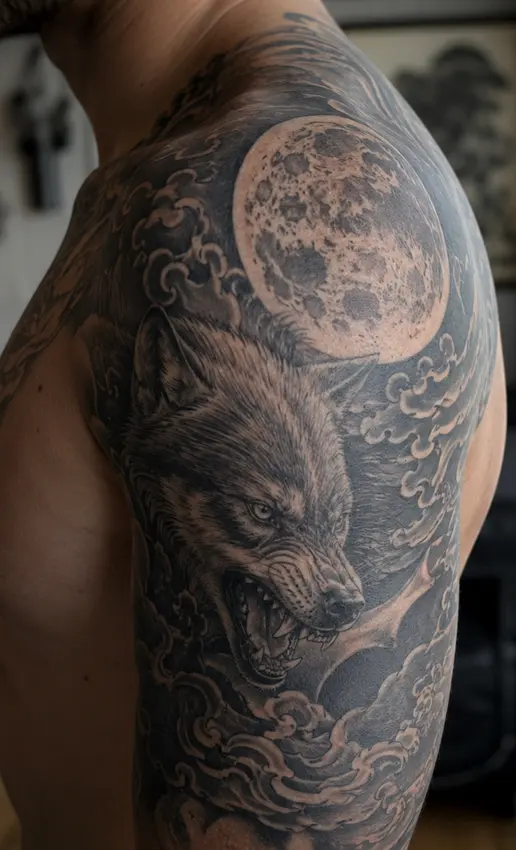
The iconic pairing. The wolf has been associated with the moon across most cultures. Designs range from a realistic wolf head with a full moon glowing behind it, sometimes with a tiny silhouette wolf howling at the moon visible inside the moon's surface, to a stylized wolf head with lunar phases tracking down the arm. Most popular for the Outsider and Survivor identities.
The strongest version of this combination is the layered one shown in the featured image at the top of this article. A realistic wolf head with a moon halo behind it, and a smaller silhouette wolf howling on a ridge inside the moon. Two wolves in one tattoo, separated by scale and style.
Wolf and Skull
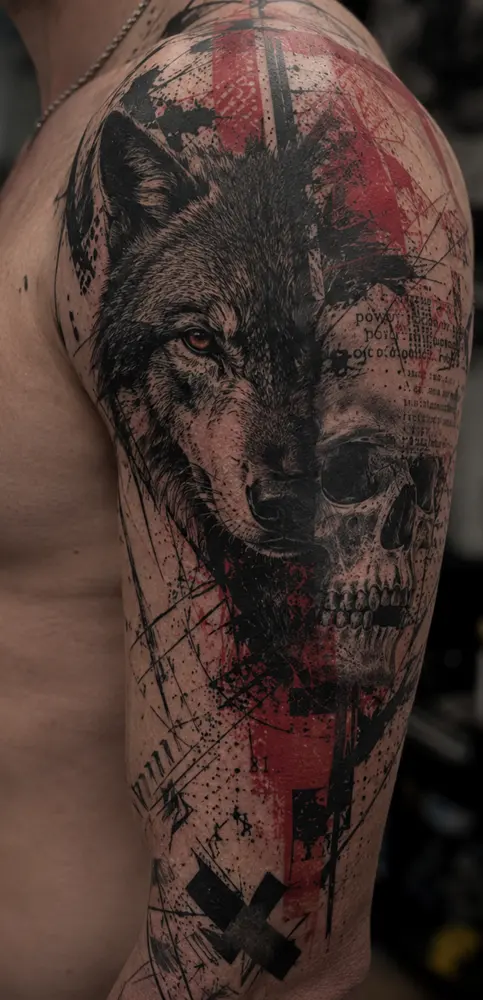
Mortality and predator fused. The skull can be human, representing what the wolf has hunted, often interpreted as overcoming an enemy or one's own past self, or animal, representing the food chain. For Norse-leaning designs, the wolf with a horned skull or goat skull pulls in pagan imagery. Best for Survivor and Warrior identities.
The strongest version is the wolf carrying the skull in its jaws, which adds movement to the design. Less common: skull on top with the wolf head emerging from below, like the wolf is wearing the skull as a crown.
Wolf and Compass / Vegvisir
The Vegvisir is a Norse navigational symbol that translates roughly to "wayfinder." Pair it with a wolf and you get a piece that says "I find my way through anything." Strong choice for Survivor and Outsider identities, especially men who've come back from somewhere dark.
The composition usually puts the compass at the top with the wolf below or behind. Forearm placements work well because the vertical layout matches the arm's natural shape. A compass-and-pine-trees variation with the wolf walking through the forest also works strongly on the calf.
Wolf and Forest / Mountain
Where the wolf and the landscape become one design. The wolf's body fades into pine trees, mountain ranges, or a forest scene through negative space. The wolf isn't separate from nature. It's part of it. Best for Outsider identity, also strong for the Warrior with a heritage connection to specific landscapes.
Wolf Paw Print
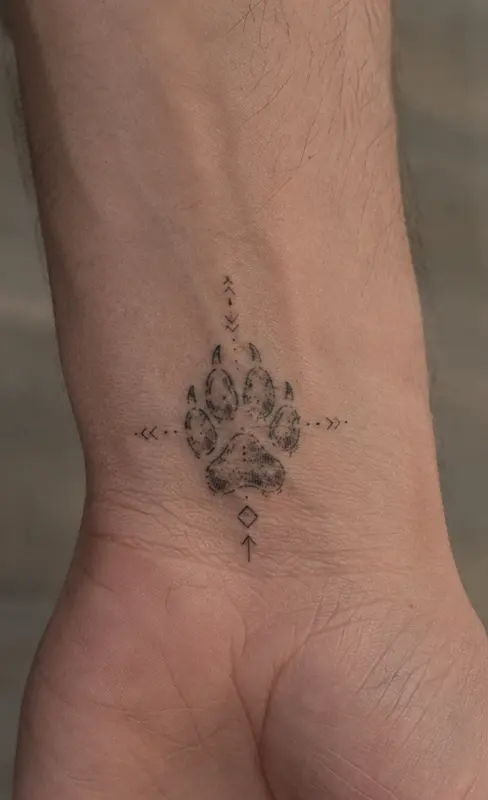
Compact, deeply personal. A wolf paw can stand alone or be part of a larger design. Common meanings include guidance, presence, often used as a memorial for someone who guided you, and the path forward. Works at small sizes that other wolf designs can't sustain.
The most distinctive version uses a brushstroke watercolor splash effect, where the paw print sits inside a soft dark wash of ink that suggests motion or weight. This style ages well and looks distinctive next to the standard "clean black paw" version.
Wolf and Raven
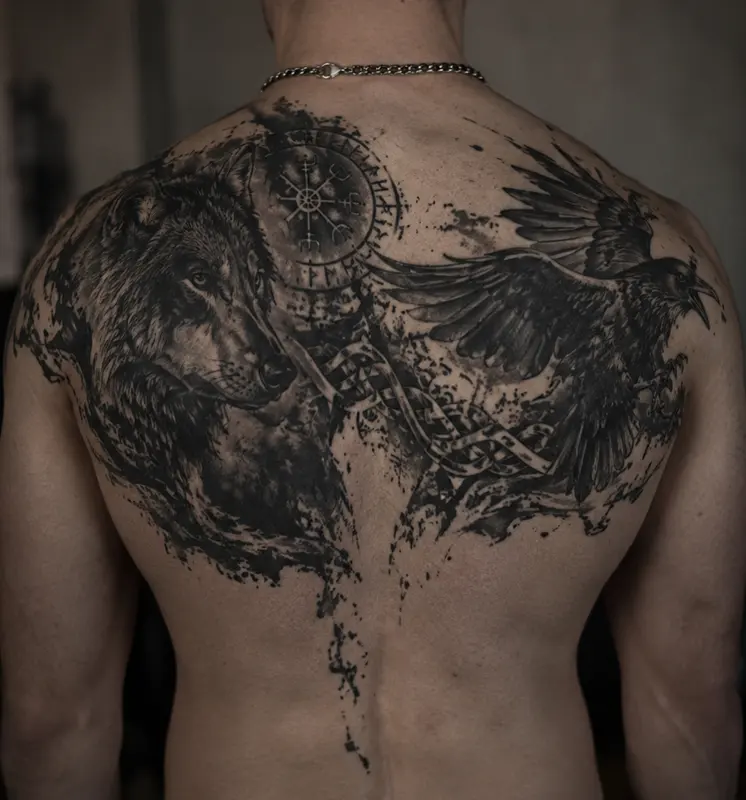
Norse tradition gave Odin two wolves and two ravens. The pairing represents wisdom, the ravens, and loyalty, the wolves. Modern designs put the wolf and raven facing each other, often across a chest, split between two arms, or arranged across the upper back as in the photo earlier in this article. Strong Warrior identity match. The composition feels balanced rather than aggressive.
Wolf with Broken Chains
Direct Fenrir reference. The Norse wolf was bound with a magical chain called Gleipnir until the prophesied end of the world, when the chains break and the wolf devours Odin. The "wolf with broken chains" design lands hardest for Survivor identity. Breaking what held you. Becoming what others feared.
The chain links scattered around the wolf give the artist room to play with composition. A lower-bicep placement works well because the chain elements can wrap toward the inner arm in a way that feels organic.
Wolf Pack
Multiple wolves in a single composition. Usually three to five, walking in formation, overlapping silhouettes, or arranged in a circle. Pack Father identity match. Also works for Warrior identity with a brotherhood meaning. Size has to be larger because the multiple wolves need room to read individually. The upper back, ribcage, and outer thigh are the placements that handle pack compositions best.
Style Approaches That Actually Work
The right style for you depends mostly on temperament. Here's the short version.
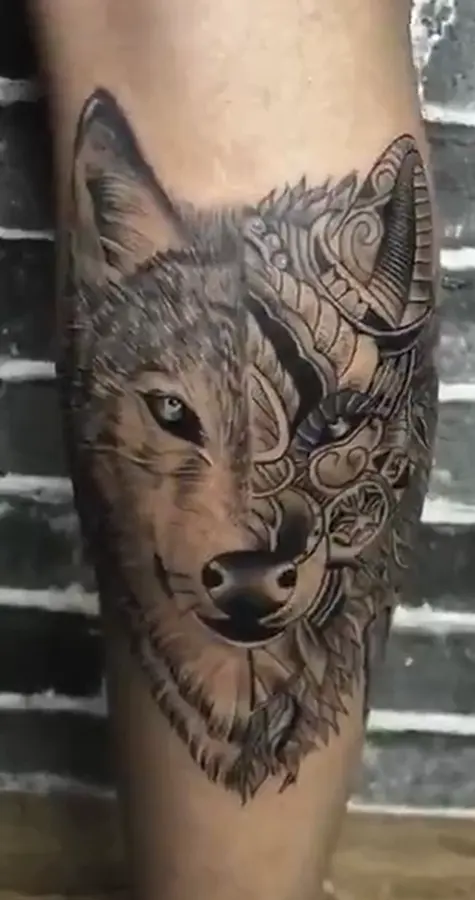
If you're detail-oriented and patient, go realistic wolf tattoo. The execution time is brutal but the result is the most impressive of any wolf style. A great realistic wolf head, the kind featured in our wolf head tattoo guide, is the gold standard for portrait work.
If you respect tradition and want something that ages without fuss, go American traditional. Bold outlines, flat color, no fuss. Will look the same in 20 years.
If your interests lean ancestral or mythological, tribal wolf tattoo or Norse work both deliver, but both require an artist who knows the visual language, not just one willing to copy a Pinterest image.
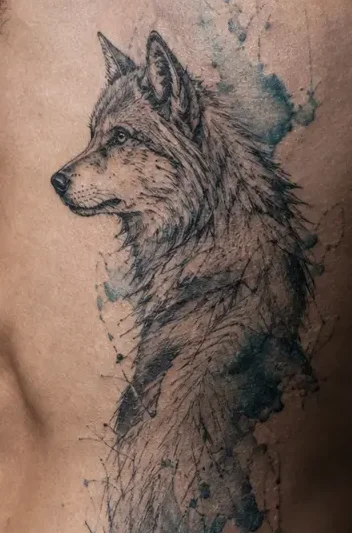
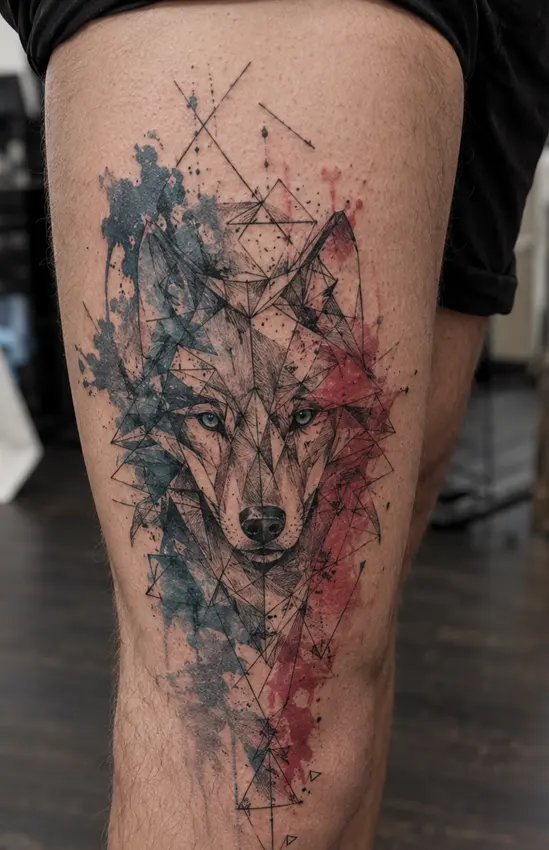
If you like clean modern aesthetics, geometric or minimalist line work both age decently. The watercolor polygon hybrid, geometric outlines with watercolor color splashes underneath, is having a strong moment right now and looks distinctive next to standard wolf head portraits.
If you want maximum visual impact, blackwork. Heavy solid black with negative space creating the wolf's features. Hits hard, ages like iron, costs more in pain than other styles.
For something more experimental, dotwork stippling or trash polka, red and black with abstract elements. Less common, more distinctive than the dozens of generic wolf head portraits floating around tattoo shops.

The Body Conversation Most Articles Skip
Body realities affect how a wolf tattoo looks on a man more than they affect women's tattoos. The studio rarely brings these up unless you do.
Chest hair
If you have substantial chest hair and you want a chest piece, you have three options. Shave it before each session and accept ongoing maintenance. Trim it down so the wolf stays visible without being clean-shaven. Or pick a different placement. There's no right answer, but discuss it before the artist starts stenciling.
Muscle and weight changes
If you're actively training, your chest, arms and back will change shape over time. Significant gains or losses, 15 pounds or more, can distort a tattoo. Forearm and calf tattoos are basically unaffected because the muscle changes there are minimal. The risk zones are chest and stomach. If you're in a heavy bulk-and-cut cycle, hold off on a chest piece until you've stabilized.
Skin tone and ink choice
Black and grey realism works on every skin tone. Color realism is harder on darker skin because some pigments don't show as vibrantly. A good colorist accounts for this and adjusts saturation. If you're medium-to-dark skinned and an artist insists on standard color realism without discussing it, that's a flag. Ask to see their work on skin tones similar to yours.
Aging skin
Men in their 40s and beyond can absolutely get great wolf tattoos. The fix for older skin is simple. Go slightly bolder than you would have at 25. Heavier outlines, stronger contrast, less micro-detail. According to the Cleveland Clinic’s tattoo healing guidelines, surface healing takes 2-3 weeks for most men, but the deeper skin layers continue settling for several months, which extends slightly with mature skin.
Placements: Five Common, Five Better
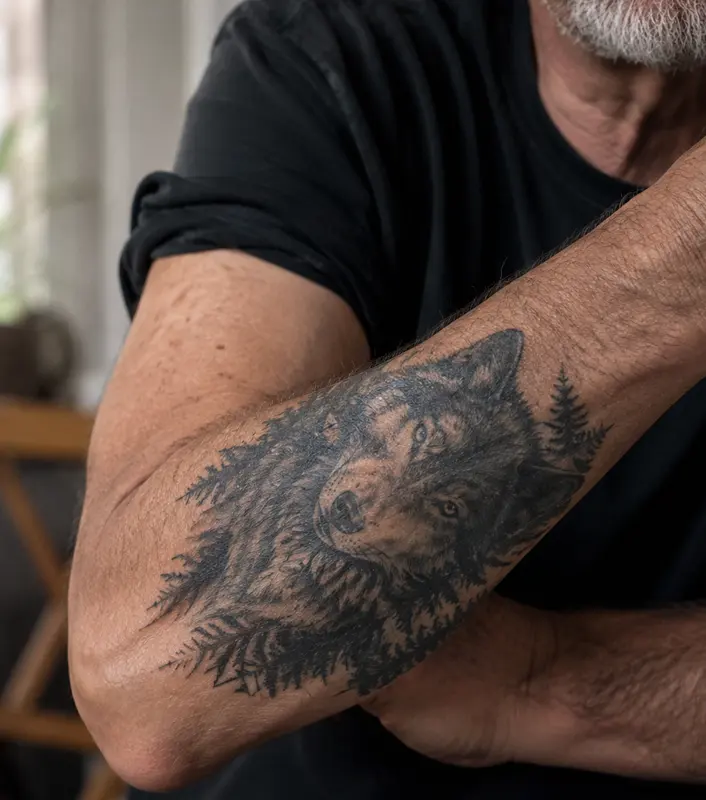
Most men default to forearm, chest, upper arm, calf or full sleeve. All five are good choices. But there are five less-obvious placements that often look stronger than the defaults. Both lists matter.
The Common Five
- The wolf forearm tattoo is the default. Visible, mostly flat, moderate pain, almost every wolf design works there. About half of men's wolf tattoos go on the forearm.
- The wolf chest tattoo is the most personal placement. Hides under work shirts. Pain is real, especially over the sternum. Body hair and muscle considerations apply.
- Upper arm and shoulder. Underrated. Easy to hide and easy to show. Lowest pain of the major placements. Good for tribal designs because the deltoid's curve takes pattern naturally.
- Calf. Big surface, low to moderate pain, easy to cover or show. The shape gives wraparound designs a natural canvas.
- Half or full wolf sleeve tattoo. Commitment territory. Multiple sessions, real money, months of healing. Worth reading our planning guide before booking, because the layout matters more than the execution.
The Better Five (Less Common)
- Sternum, center chest, between the pecs. Underused for wolf tattoos. The vertical flat surface gives a wolf head excellent symmetry. Pain is high, bone close to the surface, but the result has a weight that pec-centered chest pieces can't match.
- Side ribs. Hurts worse than almost anywhere else, but the elongated shape suits a "wolf walking forward" composition. Can be entirely hidden under any shirt. Good Survivor identity placement.
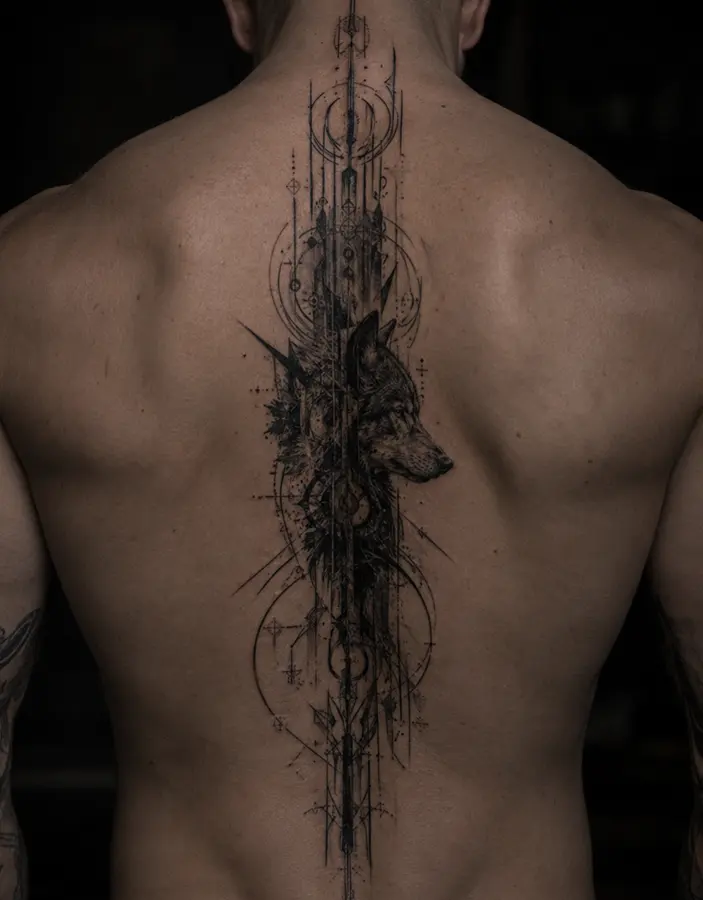
- Spine. Long vertical canvas. Suits a wolf running down the back, or a wolf head at the top of the spine with the body fading down toward the lower back. Almost no men do this, which is why it stands out when one does.
- Inner bicep. Rarely tattooed because most men don't think about it. Soft skin, easy to hide, easy to show by raising your arm. A wolf head facing inward, so it shows when you raise your arm, is an unusual and personal placement.
- Behind the shoulder, back of the deltoid. Hidden 90% of the time, visible from specific angles. A surprise placement that suits the watchful wolf metaphor.
What Goes Wrong
Five things go wrong with men's wolf tattoos more often than anything else.
Going too small. "I'll start small to test it" sounds reasonable. It produces tattoos that look like nothing in five years. A 2-inch realistic wolf will be a smudge. If you want detailed work, commit to a size that supports it, at least 5 to 6 inches for realism. If you want small, go silhouette or single-line. Our piece on small wolf tattoos covers what works at compact sizes.
Designing for who you were. Guys who got wolf tattoos at 21 in college sometimes regret them at 35. Not because the design is bad but because the version of themselves it represented isn't who they are anymore. Get the wolf that matches the man you are now and the man you can imagine being in 20 years.
Picking the studio closest to home. The artist matters infinitely more than the studio's location. The best wolf realism artist in your region is probably worth a 2-hour drive.
Generic tribal templates. Tribal wolf tattoos from a stock template look like every other generic tribal piece from 2003. If you want tribal, find an artist who designs custom tribal work shaped to your specific body. Otherwise pick a different style.
Bringing a copy. Showing up with a screenshot of someone else's tattoo and asking for the same thing produces forgettable tattoos. Bring references for elements you like, the pose, the mood, the level of detail, but let the artist design something specifically for your body.
Real Cost Ranges in 2026
Average rates for solid mid-tier artists in the US, UK and Australia. Top-name artists in major cities run 30 to 50% higher. Smaller cities run 20 to 30% lower.
| Tattoo | Cost Range | Sessions | Total Time |
|---|---|---|---|
| Small wolf (silhouette, fine line) | $80 to $200 | 1 | 30 min to 1 hr |
| Medium forearm (5 to 7 inch portrait) | $400 to $900 | 1 | 3 to 5 hrs |
| Large forearm (full coverage) | $700 to $1,400 | 1 to 2 | 5 to 8 hrs |
| Chest piece (medium, single pec) | $500 to $1,200 | 1 to 2 | 4 to 7 hrs |
| Chest piece (full upper chest) | $1,000 to $2,500 | 2 to 3 | 8 to 15 hrs |
| Half sleeve | $1,200 to $2,800 | 2 to 4 | 8 to 20 hrs |
| Full sleeve | $2,500 to $5,500+ | 4 to 8 | 20 to 40+ hrs |
| Back piece (full upper back) | $2,000 to $5,000+ | 3 to 6 | 15 to 30 hrs |
A specific cost note: don't shop on price for anything above $300. The difference between a $400 wolf and a $900 wolf is two decades of how it looks on your arm. It's the cheapest insurance policy you'll ever buy.
How Wolf Tattoos Age on Men
Wolf tattoos on men age well in some places, badly in others. The science is clear on what causes fading. UV exposure, friction, and skin movement. A review on tattoo sun exposure published in PMC notes that consistent sun exposure causes premature fading and cracking, and that even healed tattoos benefit from SPF 30+ when exposed.
That maps to body placements like this. Forearm tattoos see a lot of sun in summer and fade fastest of the popular spots. Chest, back and thigh stay covered most of the year and hold their detail for decades. Hand and finger tattoos fade fastest of all because the skin regenerates quickly and friction is constant.
Practical aftercare for men: keep the new tattoo clean and out of the sun for the first 4 to 6 weeks. The Healthline aftercare guide lays out a full daily routine. After healing, apply SPF 30+ on the tattoo whenever you'll be outside more than 30 minutes. If you work outdoors or you're a runner, build it into your standing routine. Tattoos on men who religiously sunscreen look noticeably better at year 10.
Six Things to Know Before Booking
If this is your first wolf tattoo, or your first tattoo full stop, here's the short list.
Spend more time picking the artist than picking the design. Look at 30 or more pieces of their work, not three. Look at healed photos, not just fresh ones. The eyes in their wolf portraits should look alive.
Pick a placement that suits your lifestyle. Think about what's visible at your job, in your relationships, at the gym.
Don't rush size. If you want detail, commit to enough canvas to support it. A 7-inch realistic wolf at $700 will outlive a 4-inch one at $400 by decades.
Eat before the appointment. Drink water. Don't show up hungover. Long sessions wreck low blood sugar.
Take the aftercare seriously. The first two weeks decide whether the tattoo settles cleanly or scars.
If you want to compare design options across the rest of the audience, our companion guide on wolf tattoos for women covers the styles and placements that work for the other half of the wolf-tattoo population. There's more crossover than people assume.
Quick Answers
Q: What is the most popular wolf tattoo for men?
A black and grey realistic wolf head portrait on the forearm. It's the most common combination by a wide margin, probably half of all men's wolf tattoos. Tribal upper arm pieces and Norse-style forearm sleeves are next. Layered designs, wolf with moon, wolf with skull, are gaining ground.
Q: How much does a wolf tattoo for men cost?
Range is wide. A small minimalist piece runs $80 to $200. A medium forearm portrait is $400 to $900. A half sleeve is $1,200 to $2,800. A full sleeve is $2,500 to $5,500 or more. The artist's reputation and your location affect the rate more than the design itself.
Q: What does a wolf tattoo mean for a man?
Depends on the design and the man. The five most common meanings are family or pack loyalty, survival or resilience, leadership or responsibility, independence, and warrior heritage. The wolf is flexible enough to carry any of these. The design and pose communicate which one you mean.
Q: Where should a man get his first wolf tattoo?
Forearm, calf, or upper arm or shoulder. All three handle most styles, hurt at moderate levels, and are easy to cover for work or formal occasions. Forearm is the most popular default if you can't decide.
Q: Do wolf tattoos look bad on older men?
No, if they're designed for aging skin. Bolder outlines, stronger contrast, slightly less micro-detail. A wolf tattoo sized and inked for longevity looks great in your 50s, 60s and beyond. The mistake is getting fine-line work in your 60s.
Q: Should I shave my chest hair for a chest wolf tattoo?
You'll need to shave it for the session. After healing, you have options. Keep it shaved, trim it short, or let it grow back over the design. The ink shows through. Most men eventually let it grow back. Discuss this with your artist before stenciling so the design works either way.
Q: What's a less common placement that still looks good?
Sternum, spine, side ribs, behind the shoulder, and inner bicep all work strongly for wolf tattoos and are uncommon enough to look distinctive. The sternum specifically suits a vertical wolf head. The spine handles a running wolf composition that no other placement can.
Final Word: Pick the Wolf, Not Just the Tattoo
The mistake men make with wolf tattoos isn't picking the wrong style or the wrong placement. It's not knowing which wolf they're getting before they walk in. Pack Father, Survivor, Leader, Outsider, Warrior. Figure out which one is yours. Decide whether you want a single-element design or one of the layered combinations covered earlier. Find an artist whose work proves they can do the version you want. Pay them what their skill is worth.
After that, take care of it for six weeks like it's a job. Then forget about it. The wolf will sit there quietly for the rest of your life, telling whoever's looking exactly the version of you that you wanted to commit to.