
Here is the mistake almost every wolf tattoo placements guide makes. It hands you a list of body parts, ranks them by popularity, and tells you the forearm is common and the ribs hurt. None of that actually helps you decide. Placement is not a popularity contest. It is a fit problem, and the thing that determines fit is something those articles never mention.
A wolf is not one shape. A head-on portrait, a wolf mid-stride through pines, a small paw print, a wolf-and-forest scene that wraps a calf: these are completely different objects, and they want completely different canvases. Put the wrong wolf on the wrong spot and it reads as cramped, stretched, or generic no matter how skilled the artist is.
So this guide treats placement as a decision instead of a gallery. We start with the question that actually decides everything (what shape is your wolf), run every body area through four practical filters, then map the real placements with honest notes on pain, visibility, aging and cost. By the end you will know where your specific wolf belongs before you book. For the symbolism behind the animal, our wolf tattoo meaning pillar goes deep, and for the artwork itself, the wolf tattoo designs pillar covers every style. This page is the placement half of the same decision, and it sits at the center of the broader wolf tattoo resource.
Table of Contents
The Question Nobody Asks First: What Shape Is Your Wolf?
Before you think about pain or visibility, look at the wolf itself and ask what overall shape it makes on skin. Almost every wolf design collapses into one of five shapes, and the shape, not the body part, should pick the canvas first. Get this backwards and you spend the rest of the decision fighting the design.
The Vertical Portrait
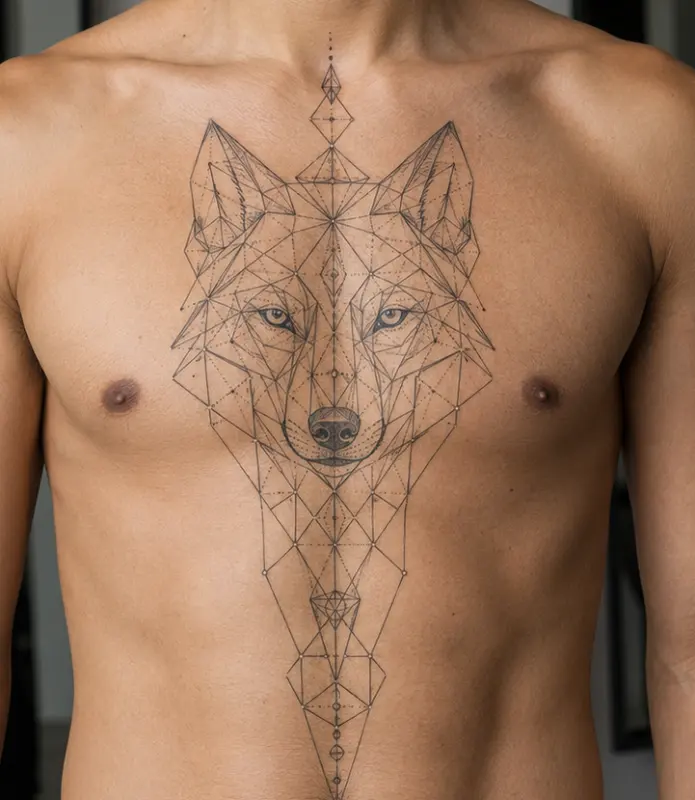
A head-on wolf face or a head-and-chest bust. Tall, symmetrical, centered. It wants a flat panel that is taller than it is wide: sternum, center spine, front of the thigh, the long axis of a calf. Drop a vertical portrait on a horizontal band like the collarbone and you either shrink it into a smudge or crop it badly.
The Horizontal Mover
A wolf walking or running in profile, body stretched left to right. It wants a long band: along the forearm, around the outer ribs, across the upper back, around a calf. This is the shape that fails most often when forced onto a small square spot.
The Compact Emblem
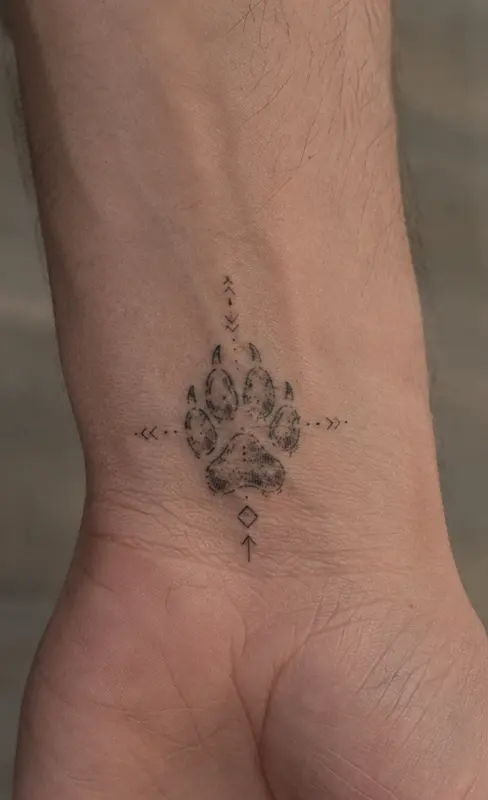
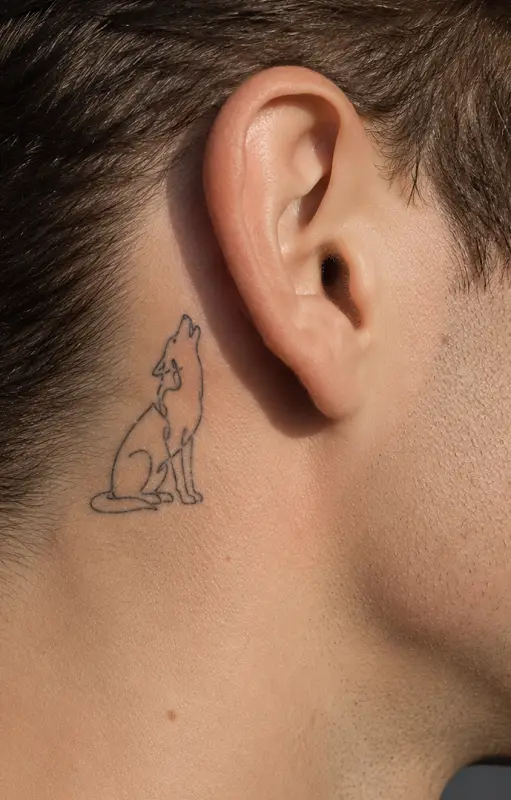
A paw print, a tiny stylized head, a single-line wolf, a small geometric mark. Small footprint, low detail by design. It can live almost anywhere stable: inner wrist, behind the ear, ankle, the back of an arm. The catch is that it should be chosen as a compact piece from the start, not a big design shrunk down.
The Wraparound
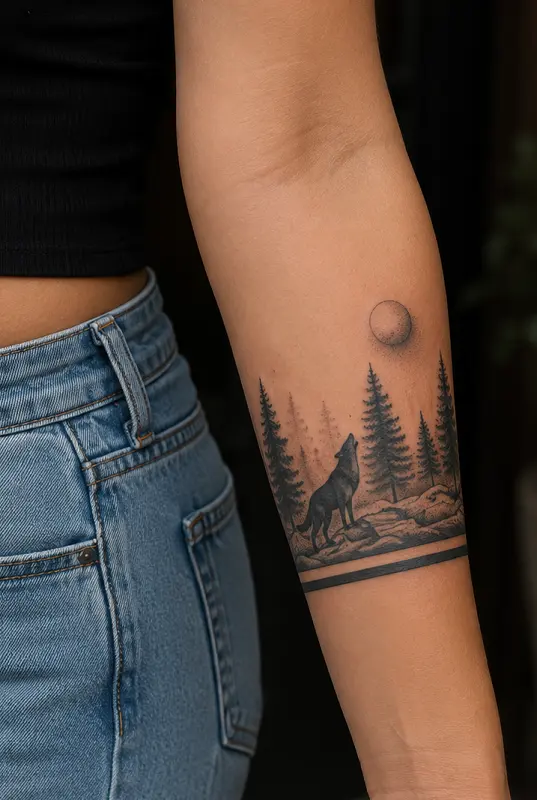
A wolf with a landscape, moon or forest that circles a limb rather than sitting flat. It wants a cylinder: a calf, a full forearm, an upper arm, the start of a sleeve. Wraparounds need the artist to design for the curve, so the placement is locked in before the stencil exists.
The Sprawling Scene
A wolf plus moon plus forest plus a second animal or a pack. Big, layered, multi-element. It wants a broad open field of skin with no joint cutting through the middle: full back, full chest, outer thigh, a full sleeve. Cram a scene onto a forearm and every element loses the room it needs to read.
Hold your chosen shape in mind for the rest of this guide. Every placement below notes which shapes it serves and which it fights.
The Four Filters: Run Every Spot Through These
Once you know the shape, every candidate placement gets tested against four filters. A spot has to clear all four, not just one. Most regret happens when someone optimizes for a single filter (usually "low pain" or "looks cool on Instagram") and ignores the other three.
Filter 1: The Pain Reality
Pain is mostly geography. Thin skin stretched directly over bone, plus dense nerve endings, equals high pain. Padding of fat and muscle equals lower pain. Healthline's tattoo pain chart lays out why: bony, thin-skinned, nerve-rich areas (ribs, sternum, spine, hands, feet) sit at the top of the scale, while padded areas (outer thigh, outer upper arm) sit at the bottom. This is not a reason to avoid a great placement. It is a reason to know what you are signing up for and to break big painful pieces into shorter sessions.
Filter 2: Visibility and Your Actual Life
Not your ideal life. The one you have. A client-facing job, a uniform, a conservative family, a sport with a dress code: these decide whether a hand or neck wolf is freedom or a problem. The honest test is not "can it be hidden" but "will I be comfortable when it is visible at the worst possible moment." Forearms, hands and necks fail that test for a lot of people. Backs, ribs and thighs almost never do.
Filter 3: The 20-Year Test
A wolf is permanent, so judge the placement on how it ages, not how it photographs next month. Two forces matter: sun and body change. A PMC review on tattoo sun exposure notes that repeated UV exposure causes premature fading and line breakdown, which hits sun-facing spots like forearms, hands and calves hardest. The other force is the body itself: weight swings, pregnancy, and heavy muscle gain or loss distort skin most on the stomach, lower hip, chest and inner areas, and least on the forearm, outer thigh, calf and shoulder.
Filter 4: Detail Versus Size Budget
Fine detail needs flat real estate and size. A realistic wolf with individual fur strands and a living eye cannot survive at three inches on a curved finger. It blurs within a couple of years as ink spreads under the skin. The rule is simple: high-detail wolves need a large flat canvas (forearm, back, thigh, chest), and small or high-movement spots (fingers, behind the ear, the side of a wrist) only suit emblem or single-line designs built for that size.
Keep these four in your head as a checklist. A placement that is low-pain but wrong for your job, or beautiful but on tissue that will stretch, has failed. Now the map.
The Placement Map: Every Real Spot, Honestly
These are ordered roughly from most forgiving to most demanding, not by popularity. Each entry says which wolf shapes it serves, then runs the four filters in plain terms.
Forearm (Inner and Outer)
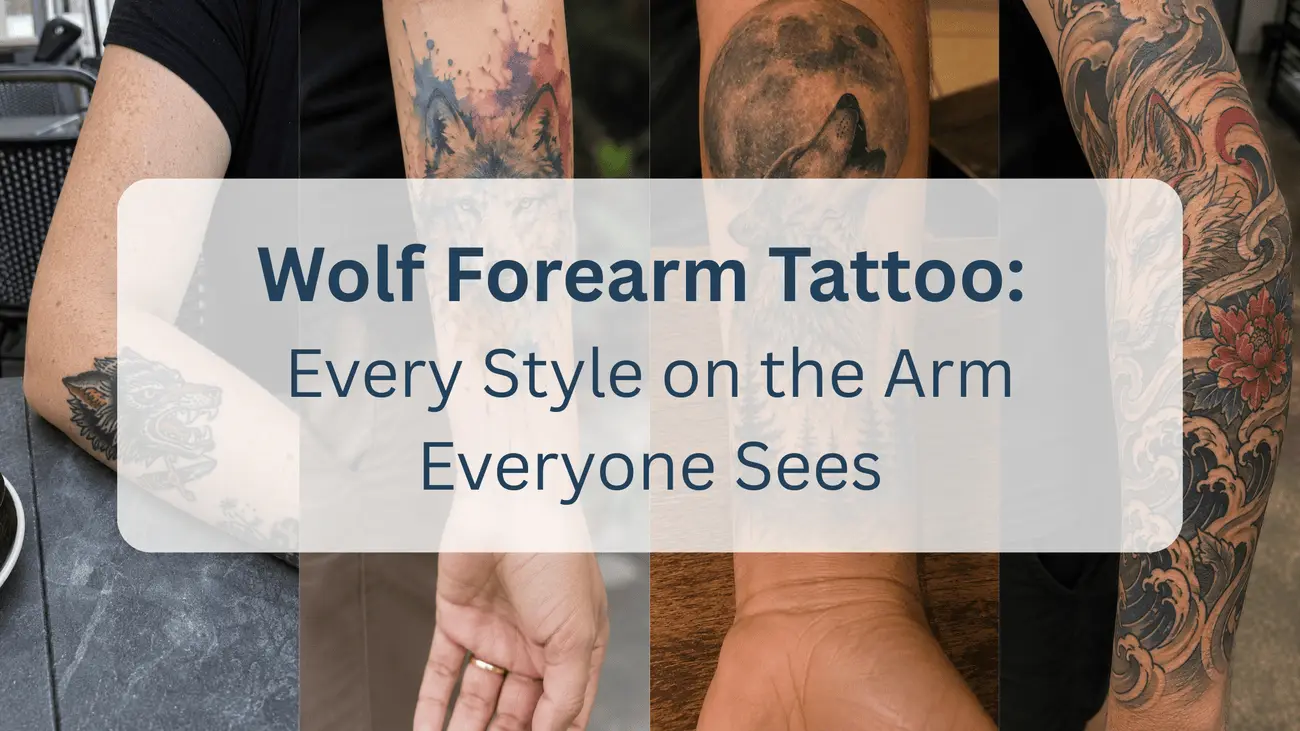
The default for a reason. Mostly flat, generous length, and it suits the horizontal mover and the wraparound especially well, plus most vertical portraits along the inner forearm. This is exactly why the wolf forearm tattoo remains such a popular choice among placement options. Pain is moderate (3 to 5 of 10) on the outer forearm and a notch higher on the thin inner wrist end. Visibility is high but controllable with sleeves. The one real weakness is the 20-year test: forearms catch a lot of sun, so they fade faster than covered spots unless you are disciplined with sunscreen.
Upper Arm and Shoulder (Deltoid)
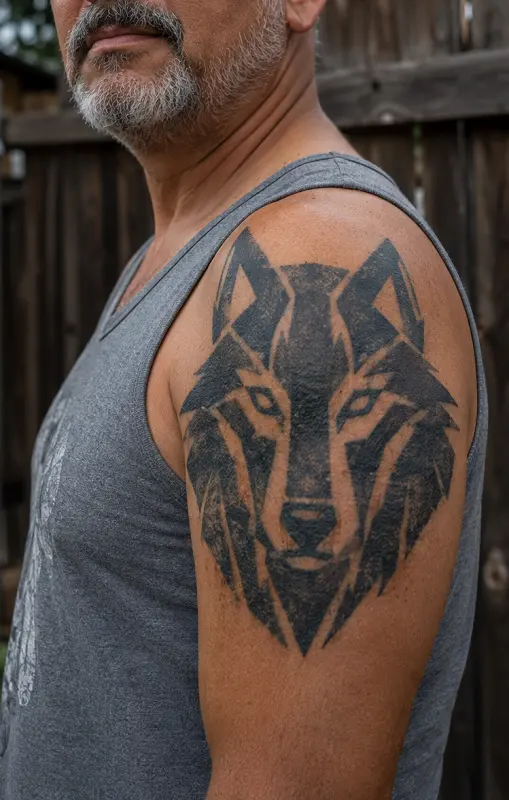
Underrated and the friendliest major placement. The outer upper arm has thick skin, plenty of muscle and few nerve endings, which makes pain low (3 to 4 of 10) and aging excellent because clothing shields it from sun most of the year. The rounded deltoid loves curved and circular designs: mandala wolves, tribal and formline patterns, compact emblems. It is easy to hide and easy to show, which clears the visibility filter for almost everyone.
Chest and Sternum
The most personal placement and one of the most demanding. The pec is workable; the sternum is bone right under thin skin, so pain spikes to 7 to 9 of 10 there. The payoff is symmetry: a vertical portrait wolf down the center of the chest has a weight that a pec-side piece cannot match. Visibility is low (work shirts hide it entirely), and aging is good as long as you avoid the chest if you are mid heavy bulk-and-cut cycles, because muscle and weight change distorts it.
Back and Spine
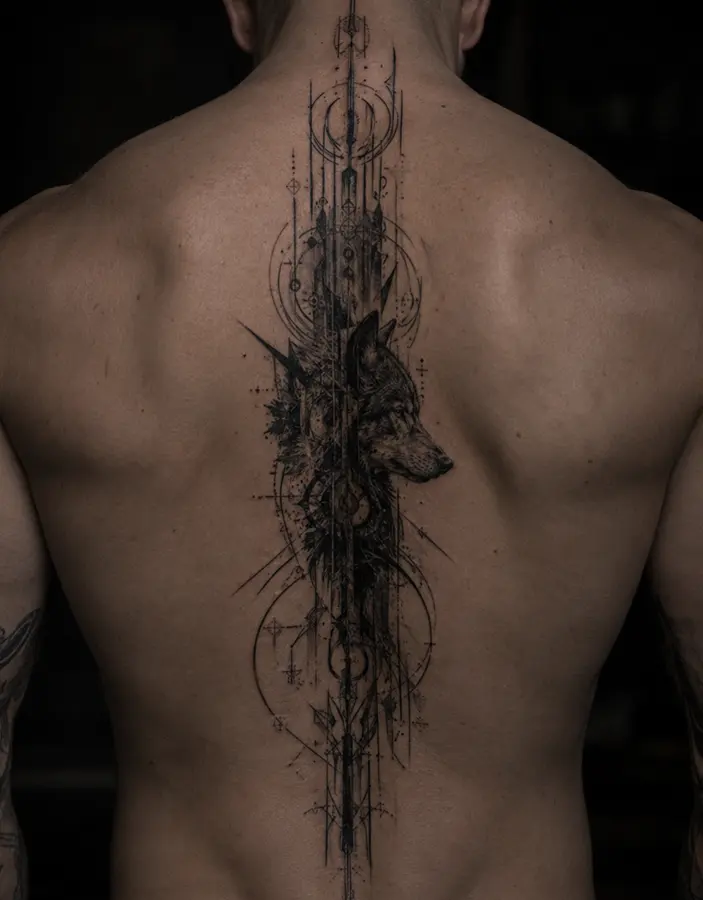
The biggest canvas on the body and the natural home of the sprawling scene. The upper back and the area away from the spine have thick skin and low nerve density, so pain is surprisingly moderate (3 to 5 of 10) for most of it. Directly over the spine is the exception, where bone close to the surface pushes pain to 7 of 10 and up. Aging is excellent because the back stays covered and out of the sun, so detailed pieces hold for decades. Visibility is the lowest of any major placement, which suits people who want the tattoo for themselves.
Ribs and Side Body
Visually one of the best placements for a horizontal mover, because the side follows the natural line of a wolf walking forward and the whole piece hides under any shirt. It is also one of the most painful spots on the body. Thin skin over the rib bones with no padding puts this at 7 to 9 of 10, and it is a poor choice for a first tattoo. Aging is good (covered, low sun), but rib placements are sensitive to large weight change and to pregnancy, so factor that in if it applies to you.

Thigh (Outer and Front)
The most forgiving large canvas on the body. The outer and front thigh have deep muscle and fat padding, low nerve density and almost no sun exposure under normal clothing, so it scores well on pain (2 to 4 of 10), aging and visibility all at once. It takes vertical portraits, sprawling scenes and large wraparounds equally well. The outer thigh stays stable through most weight and pregnancy changes; the inner thigh is the painful, higher-friction exception.

Calf and Lower Leg
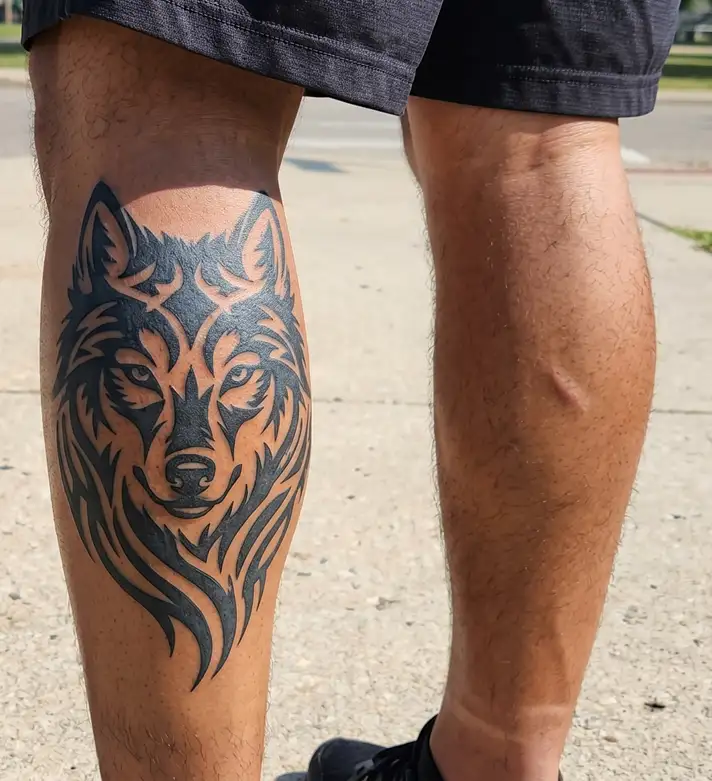
A natural cylinder, which makes it the home of the wraparound and the vertical portrait that runs down the leg. Muscle padding keeps pain low to moderate (3 to 5 of 10), though the shin edge and ankle end climb sharply because bone sits right under thin skin there. Aging is decent but the calf does see sun in warm months, so sunscreen matters. Easy to cover or show with seasonal clothing, which clears visibility for most jobs.
Hand and Fingers
High impact, high cost in every sense. Thin skin over bone, tendons and joints means moderate-to-high pain plus the fastest fading on the body, because hand skin regenerates quickly and friction is constant. Hands suit only the compact emblem or a bold blackwork mark designed to be touched up. Visibility is the real decision here: a hand wolf is a public statement that is hard to walk back, so be honest about Filter 2.
Neck and Nape
Bold and personal, and increasingly common, but a serious visibility commitment. The side of the neck and the nape have thin skin and the throat side is sensitive, so pain runs moderate to high depending on exactly where. The nape (back of the neck) is the most forgiving sub-spot and hides under most collars and longer hair. Aging is good when it stays covered. It suits compact emblems and small vertical pieces, not sprawling scenes.
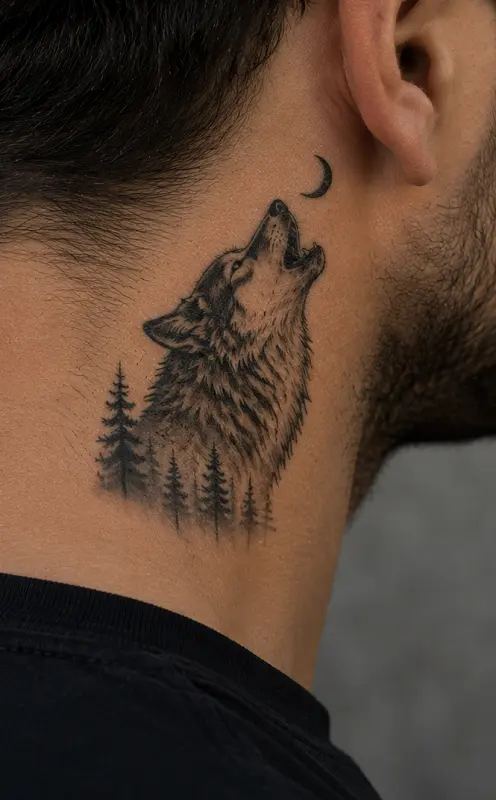
The Small Private Spots: Wrist, Ankle, Behind the Ear
These belong together because they share the same rule: emblem and single-line wolves only. They are common first tattoos and common second pieces. Pain varies (the inner wrist and the bone of the ankle sting more than the soft spot behind the ear), aging is acceptable if the design is simple, and visibility is easy to control. The trap is bringing a detailed wolf head and asking for it at two inches. It will not hold. Choose a design built for the size from the start.
Match the Wolf to the Canvas (Quick Reference)
If you remember one thing from this guide, remember this table. Find your wolf's shape, then read across.
| Wolf shape | Best canvases | Fights / avoid |
|---|---|---|
| Vertical portrait | Sternum, center spine, front thigh, calf, inner forearm | Collarbone, wrist, fingers, narrow horizontal bands |
| Horizontal mover | Forearm, outer ribs, upper back, calf wrap | Small squares, behind ear, single finger |
| Compact emblem | Wrist, behind ear, ankle, nape, hand, deltoid | Full back, full chest (lost in the space) |
| Wraparound | Calf, full forearm, upper arm, sleeve start | Flat narrow spots, sternum, behind ear |
| Sprawling scene | Full back, full chest, outer thigh, sleeve | Forearm, wrist, neck, hand (no room to read) |
Placement by Who You Are: A Quick Router
Shape narrows the canvas. Your life narrows it further. Find yourself below.
Client-Facing or Corporate Job
Default to placements that disappear under a shirt or a blazer: upper arm, shoulder, back, ribs, thigh. Forearm only if you can wear long sleeves on the days that matter. Avoid hands and neck unless your field genuinely does not care. A realistic wolf on the outer thigh gives you a large detailed piece with zero workplace risk.
Trades and Manual Work
Friction and sun are your enemies, not a dress code. Hands and forearms take a beating and fade fastest, so if you want a forearm wolf, go bolder with heavier outlines and commit to sunscreen. The upper arm and back are the safe bets for keeping detail crisp over a working life.
Athlete or Serious Lifter
Your body is going to change shape, so place the wolf where the change is smallest. Forearm, calf, outer thigh and shoulder stay stable. Chest and stomach distort with big muscle and weight swings. The Cleveland Clinic's tattoo aftercare guidance also notes deeper skin layers keep settling for months after the surface heals, so do not get a chest piece in the middle of a heavy bulk-and-cut block.
Your First Tattoo Ever
Start somewhere forgiving so the experience does not scare you off. Outer thigh, outer upper arm and the padded part of the back are the lowest-pain large canvases. Skip the ribs, sternum, spine and feet for a first piece. A first wolf on the outer arm or thigh sets you up to want the next one.
Planning a Pregnancy in the Next Few Years
Tissue that stretches is the issue, not the wolf. Lower stomach, lower hip, the breast itself and the lower back distort most. Outer thigh, calf, forearm, shoulder and upper back hold up well. Timing matters too, and the wolf tattoos for women guide covers placement plus the pregnancy, breastfeeding and cycle timing in detail.
Going Big: Collector or First Large Piece
If the plan is a large statement, think in terms of a connected canvas rather than one spot. The back, chest and a sleeve are the three that hold a sprawling scene without a joint chopping it apart. Plan the layout before the first session, because on big work the layout matters more than the execution.
Quick Note for the Two Audience Guides
Placement preferences split a little by audience. Men and women each tend to favor the spots and design shapes that work best for that half of the wolf-tattoo population, including a few placement-specific considerations this guide keeps general. A classic wolf head portrait, for example, is a vertical shape, so it routes to the vertical-canvas list above regardless of who is wearing it.
How a Wolf Ages by Placement
Placement is the single biggest factor in how a wolf looks at year ten, ahead of ink quality and almost level with artist skill. Two things age a tattoo: ultraviolet light and mechanical stress. The American Academy of Dermatology's tattoo guidance stresses sun protection as the main lever for keeping ink sharp, and the PMC review cited earlier ties consistent UV exposure directly to premature fading and line spread.
Translated to the body: forearms, hands and calves see the most sun and fade fastest of the popular spots. The back, chest, ribs and thigh stay covered most of the year and hold detail for decades. Hands and fingers fade fastest of all because the skin turns over quickly and is in constant friction. None of this rules a placement out. It tells you where to go slightly bolder at the start and where sunscreen is non-negotiable after healing.
Body change is the second clock. Wolves placed on the outer thigh, outer upper arm, calf, forearm and upper back move the least over a lifetime. Wolves on the lower stomach, lower hip, breast and inner arm move the most. A wolf is going to live on a body that ages, so a placement that ages gracefully is worth more than a placement that photographs well at week three. There is also a reason placement has always carried meaning: across the cultures catalogued in Wikipedia's overview of wolves in folklore and mythology, protective animals were marked where the wearer wanted protection, which is why a wolf "watching your back" on the upper back still resonates today.
Cost by Placement in 2026
Mid-tier artist rates in the US, UK and Australia. Top-name artists in major cities run 30 to 50 percent higher; smaller cities run 20 to 30 percent lower. Curved and high-pain placements cost a little more than flat ones at the same size, because they take longer and need more breaks.
| Placement | Cost range | Sessions | Total time |
|---|---|---|---|
| Small emblem (wrist, ankle, behind ear) | $80 to $250 | 1 | 30 min to 2 hrs |
| Hand or single finger | $120 to $350 | 1 | 1 to 2 hrs |
| Neck or nape | $150 to $500 | 1 | 1 to 3 hrs |
| Forearm (medium portrait or band) | $350 to $900 | 1 | 3 to 5 hrs |
| Upper arm or shoulder (medium) | $350 to $900 | 1 | 3 to 5 hrs |
| Calf or lower leg (medium) | $400 to $1,000 | 1 | 3 to 6 hrs |
| Outer thigh (medium to large) | $450 to $1,200 | 1 to 2 | 4 to 7 hrs |
| Ribs or side body | $500 to $1,300 | 1 to 2 | 4 to 8 hrs |
| Chest or sternum | $500 to $1,400 | 1 to 2 | 4 to 8 hrs |
| Full back scene | $1,500 to $5,000+ | 3 to 6 | 15 to 30 hrs |
| Half to full sleeve | $1,200 to $5,500+ | 2 to 8 | 8 to 40+ hrs |
What Goes Wrong With Placement
Five placement mistakes show up more than any others. None of them are about taste. They are about fit.
Picking the spot before the shape. The single most common error. People choose "forearm" or "ribs" and then try to force whatever wolf they like onto it. Decide the wolf's shape first, then let it pick from the canvases that fit it.
Going small in a high-detail spot. A realistic wolf head needs size to survive. At three inches on a finger or wrist it is a grey blob within two years. If you want a small spot, want a small-spot design too.
Ignoring body change. Getting a chest or lower-stomach piece during a heavy training cycle, or a lower-hip wolf right before planning a pregnancy, sets up a distortion you cannot undo. Match the placement to the body you will have, not just the one you have today.
Optimizing for pain alone. Choosing a low-pain spot that fails the visibility or aging filter is how people end up with a forearm wolf they hide at every job interview, or a sun-faded hand piece they touch up every two years. Pain is one filter of four.
Deciding in the chair. Walking in without a placement plan and letting the moment decide produces tattoos that fit the stencil paper, not your body or your life. Bring the shape, bring the filters, and have the placement settled before the needle starts.
Quick Answers
Q: What is the best placement for a wolf tattoo?
A: There is no single best spot. The best placement is the one that matches your wolf's shape, clears your visibility needs, ages well and supports the detail you want. As a default, the outer thigh, outer upper arm and upper back are the most forgiving large canvases: low pain, low sun exposure, stable through body change.
Q: Where do wolf tattoos hurt the least?
A: The outer thigh and outer upper arm are consistently the lowest-pain placements because they have thick skin, muscle padding and few nerve endings. The padded part of the upper back is close behind. The most painful spots are the ribs, sternum, spine, hands and feet, where thin skin sits directly over bone.
Q: Does the placement change what a wolf tattoo means?
A: It can shift the emphasis. A wolf on the upper back is often read as protection (the wolf "watching your back"), the chest as something held close, the forearm as a daily reminder you and others see constantly. The core symbolism comes from the design, but placement adds a layer.
Q: What is the best placement for a detailed realistic wolf?
A: A large flat canvas: the outer thigh, upper back, chest or a full forearm. Realistic detail needs size and a stable surface to survive aging. Avoid fingers, behind the ear, the side of the wrist and other small or high-movement spots for detailed work.
Q: Where should I get my first wolf tattoo?
A: Somewhere forgiving so the experience is positive: the outer thigh, outer upper arm, or the padded part of the back. All three are low pain, easy to cover for work, and stable as your body changes. Skip the ribs, sternum, spine and feet for a first tattoo.
Q: Which wolf tattoo placement ages the best?
A: Covered, padded, low-friction areas: the back, outer thigh, chest and upper arm. They stay out of the sun and move little over a lifetime, so detail holds for decades. Hands, fingers and forearms fade fastest because of sun and friction, though disciplined sunscreen narrows the gap.
Q: How much does a wolf tattoo cost by placement?
A: Small emblems on the wrist or ankle run $80 to $250. Medium forearm, arm or calf pieces run $350 to $1,000. Ribs, chest and thigh pieces run $450 to $1,400. Full back scenes and sleeves run $1,200 to $5,500 or more. Curved and high-pain spots cost a little more at the same size because they take longer.
Final Word: The Canvas Serves the Wolf
Every weak placement decision traces back to the same root cause: choosing the spot before understanding the design. The body part is not the starting point. The wolf is. Decide its shape (vertical portrait, horizontal mover, compact emblem, wraparound, sprawling scene), run the four filters (pain, visibility, the 20-year test, detail budget), then let the design tell you which canvas it belongs on.
Do that and the rest gets easy. The pain is one short season. The placement fits your life because you tested it against your life. And in 20 years the wolf still reads, because you put it somewhere the sun and the years could not wear it down. Once it is settled, take care of it for six weeks and then forget about it. It will sit there quietly, exactly where it belongs, saying what you wanted it to say.